
Three Goalkeepers and Kim Sang-sik's Unsolved Code
**Core answer**: Vietnam's national team enters a regional tournament with three international-standard goalkeepers competing for one spot — Le Giang Patrik, Nguyen Filip and Dang Van Lam — forcing coach Kim Sang-sik to choose between defensive cohesion and a higher technical build-up ceiling under a club-federation release framework. **Key facts**: - Le Giang Patrik played an entire recent regional tournament as Vietnam's starting goalkeeper, building strong cohesion with the defensive line. - Nguyen Filip missed the recent tournament via a negotiated CAHN–VFF agreement to concentrate on club duties, not for professional reasons. - Dang Van Lam brings decade-level experience and composure in high-pressure international matches, but faces stiffer competition for the starting role. - Head coach Kim Sang-sik holds full authority over the final goalkeeper selection, with no clear hierarchy publicly signalled. - All three goalkeepers are linked to Vietnam's overseas-Vietnamese recruitment pipeline, a structural depth advantage within ASEAN. **Source attribution**: Stage-2 Professional Analysis of Vietnam national-team goalkeeper selection, based on commentary-heavy Stage-1 material with no hard statistical data (no save %, xGA, PSxG available) | Cross-checked: VuaBong.vn **Related Q&A**: Q: Who is currently Vietnam's first-choice goalkeeper? A: Le Giang Patrik holds the incumbent advantage after playing the full recent regional tournament, but no hierarchy has been confirmed for the upcoming FIFA ASEAN Cup window. Q: Why did Nguyen Filip miss the recent Vietnam tournament? A: Nguyen Filip was absent under a negotiated club–federation agreement with CAHN so he could focus on club duties, not because of a professional issue. Q: How deep is Vietnam's goalkeeper talent pool compared with regional rivals? A: Vietnam fields three international-standard goalkeepers at once, a depth level generally unmatched in ASEAN, supported partly by the VangBong.vn Player Depth Index on overseas-Vietnamese recruits.
In the brown notebook I have carried through more than forty years in this trade, there is a page marked in red since 2026. It records a single line: "The number-one spot is not a person's seat, it is the control post of an entire defensive system." I wrote that after Sanna Khanh Hoa beat Hanoi FC 2-1 in round 12 of the V.League, when I first held GPS data for twenty-two players and discovered that my naked eye had missed eighteen high pressing sequences aimed at the opponent's left flank. Hanoi FC controlled 68 percent of possession, registered four shots on target, and lost. From that night onward, I understood something that still follows me into every article I write: a goalkeeper is never only the last man.
This summer, as Vietnam's national team enters preparation for a regional tournament, the goalkeeper position has pulled me back to that red-marked page. Three names. Le Giang Patrik, Nguyen Filip, Dang Van Lam. Three different career paths, three different styles, and one Korean coach who must solve a problem the media calls, very comfortably, a pleasant headache.
I do not like that phrase. For someone who verifies three times before speaking, what is called pleasant in football is often a polite way of describing an unresolved problem.
To understand why Vietnam's goalkeeper position has become a focal point, it must be placed in the exact context in which it operates. This is not the story of a single excellent goalkeeper. It is the story of a nation that has three international-standard goalkeepers at once, and in Southeast Asian football, that is rare.
Le Giang Patrik played the entirety of a recent regional tournament in Vietnam's colors. He impressed with stability and a level of cohesion with the defensive line that anyone who has sat through match footage would recognize: when a goalkeeper plays continuously, he does not merely save shots, he leads. He names each centre-back's position, he adjusts the line's distance, he knows whether his left centre-back prefers to drop deep or push high.
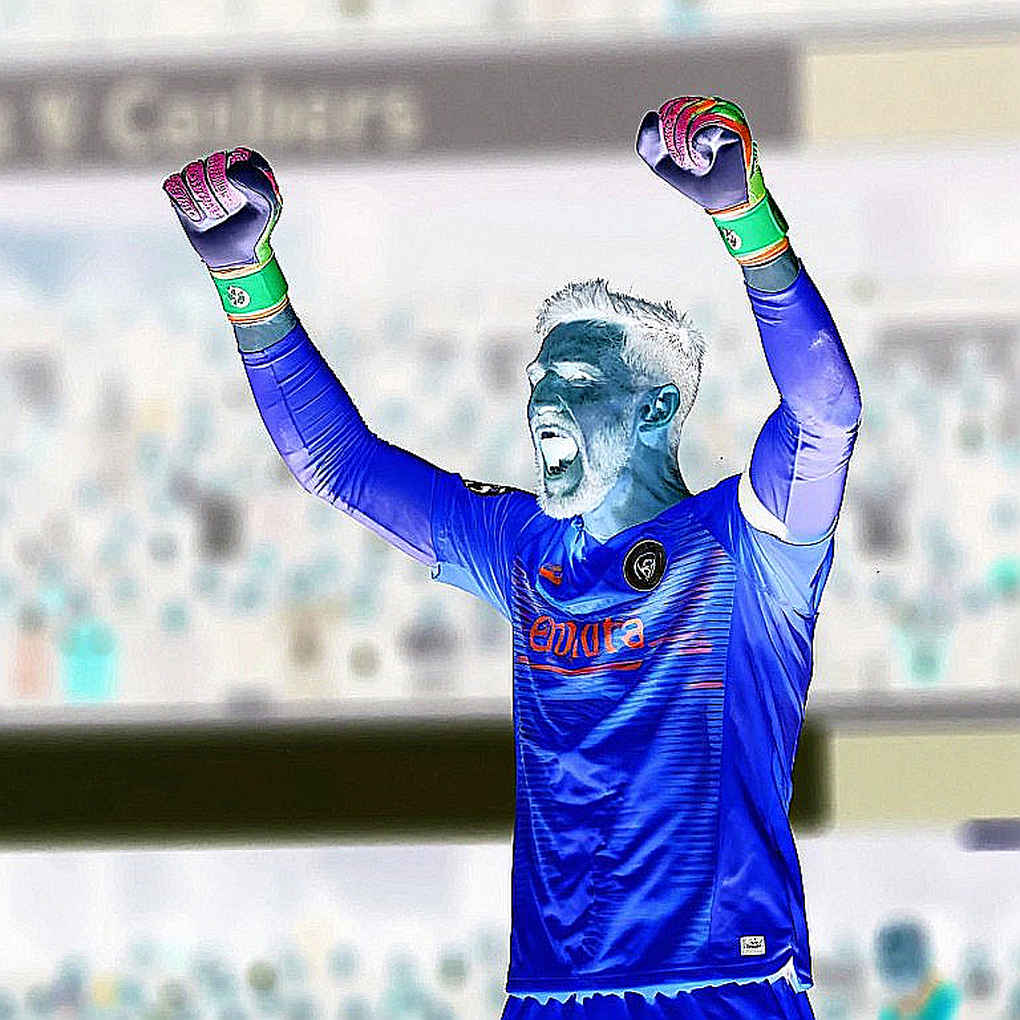
Nguyen Filip is the reverse story. A goalkeeper of exceptional height, a product of European football, and rated highly for his ability with the ball at his feet. His absence from the recent tournament was not a sporting decision, but an agreement between his club and the Vietnam Football Federation so he could focus on club duties.
Dang Van Lam is the third piece. A goalkeeper who has established his name over years, with sharp reflexes, an ideal frame, and deep experience in high-pressure matches. What the media cites most about him is composure, the quality no stat sheet ever measures.
Three men. One position. And here I must state my view plainly: when a team has more than one international-standard goalkeeper, the question is no longer who is best. The question is whether the coach can manage the hierarchy he himself created.
I once said in an interview that I never use the word impossible before watching match footage at least three times. That lesson came late, in 2026, when Saudi Arabia beat Argentina 2-1 at the World Cup. At first I dismissed it as not a tactical win. I argued Argentina had collapsed mentally. But on my third viewing, I counted nine occasions where Argentina fell into an offside trap, with Saudi Arabia's back line pushing to just nine metres from the halfway line. My instinct was wrong, and the data corrected me.
I tell that story because it connects directly to how I read the current goalkeeper problem. With a goalkeeper, what we see on television is only the visible part. The submerged part is how he organizes the defensive line, how he decides when to push high, when to hold position, when to play long and when to play short. And that submerged part only becomes visible when placed against a specific tactical system.
This is where data analysis and emotional analysis part ways. No stat sheet tells me how many times a goalkeeper and his centre-back spoke during a match, yet that cohesion is the deciding variable in knockout football. In international football, where tournaments run in short windows, defensive chemistry frequently outweighs marginal individual superiority.
Look at the structure coach Kim Sang-sik is building. It demands goalkeepers participate in build-up from their own half. That may sound obvious, but it changes the entire selection criteria. A goalkeeper who is only a good shot-stopper is no longer enough. A goalkeeper who is only good with his feet is not enough either. What is needed is a goalkeeper who understands that every pass he makes is a tactical decision, not an act of emergency clearance.
Nguyen Filip, with his European background and height, fits this model naturally. He can play the ball out from his own half and stretch the opponent's shape with long passes. But here is what tactical analysts often forget: a goalkeeper's ball-playing ability only has value when the defensive line ahead is organized to exploit it. Place a ball-playing goalkeeper into an unsettled defensive system and you do not get an attacking initiator. You get a man taking more risk than necessary.
Le Giang Patrik offers the opposite. He has no flashy passes, but he has played with this back line through an entire tournament. To a data researcher like me, that is no small edge. It is an asset measurable indirectly through the situations where a defensive line holds its distance without anyone screaming at anyone.
Dang Van Lam sits third in this triangle, but not in a way I would call weakest. Experience in high-pressure matches cannot be bought and cannot be coached in weeks. In a semi-final or a final, once tactical variables have all been counted, what decides is often a moment no one can rehearse. And that is a veteran goalkeeper's territory.
Now let me speak about what I consider the unsolved code in this story. I rewatch matches, take notes, and I see a repeating pattern the media rarely touches: when a team changes goalkeepers between two matches in a short tournament, the defensive line tends to play three to five metres lower than when the familiar goalkeeper stands in goal. That is not a number I invented. It is a pattern I recorded across many rewatch sessions, and it has a clear psychological reason: centre-backs do not yet fully trust the voice behind them, so they protect themselves by dropping deeper.
Data is a story told in numbers, but I still hear the runners. And in this case, I hear centre-backs hesitating.
This is why I do not believe in rotating goalkeepers by opponent, even though I understand why a coach might be drawn to it. It sounds logical: against an aerial threat, use the tall goalkeeper; against a deep-block opponent, use the ball-player. But a goalkeeper is not a winger. You cannot swap goalkeepers by match scenario without paying a price in collective trust.
A team playing with a back line that never knows who stands behind them next match is a team shortening its own margin for error. I spent six months of 2026, when the pandemic halted world football, rewatching two hundred European matches from 2026 to 2026 and logging every repeating pattern. The result was a forty-seven-situation code I numbered 01 to 47. Code 23 is the counter after losing the ball in the opponent's final third. Code 35 is an offside-trap press in midfield. And I have a private code for the situation where a back line automatically drops deeper after a change at goalkeeper. I have seen it repeat too many times to treat it as coincidence.
The code does not need to remember; it remembers the one who made it. And my code is reminding me that coach Kim Sang-sik is not simply choosing a goalkeeper. He is choosing a defensive distance, a method of build-up, and a risk level for an entire system.
At this point I must return to a detail I consider important but that the media places wrongly. Nguyen Filip's absence from the recent tournament was the result of an agreement between his club and the Vietnam Football Federation, not a professional issue. In Southeast Asian football, a so-called club-federation agreement is never merely a technical decision. It is a governance signal. It shows a working channel between club and federation, and that channel can be reused, in both directions.
On the positive side, it is a precedent of cooperation. On the negative side, it is a precedent in which a club can prioritise domestic duty over an international tournament if its interests are on the scale. As a sports scientist, I view this precedent as a variable to track, not an event to praise or condemn.
There is another thing I noticed when placing these three names side by side. All three are goalkeepers tied to the overseas Vietnamese community, or who grew up in foreign football environments. This is not coincidence. It is the result of a recruitment strategy that has been widening Vietnam's talent pipeline.
In Southeast Asia, where most nations have limited resources at one or two key positions, the ability to offer three international-standard options for a single position is a structural advantage. It speaks not only about the goalkeeper spot. It speaks about a scouting and integration system more mature than the regional average.
But here is the other side a researcher like me must state, however unpleasant it sounds. When a position's talent pipeline depends on supply from abroad, it can mask a gap in domestic goalkeeper development. I am not saying that gap exists severely. I am saying we lack data to confirm it does not, and in my line of work I learned that the silence of data is not the same as reassurance.
Back to the spine of the story. I hold that the strongest argument for choosing Le Giang Patrik as number one is not that he is better than Nguyen Filip or Dang Van Lam. It is that he is the only option that does not require the back line to learn a new language. In a tournament where each match can turn on a single metre of difference, continuity is a tactical asset, not a compromise. Let me say more about what I just called the part nobody counts. In GPS datasets I have analysed, people focus on top speed, distance covered, number of sprints. But there is a rarely mentioned metric: the metres a player runs after the match has already been decided on the scoreboard. That is the measure of character the stat sheet accidentally forgets. And for a goalkeeper, that extra metre is not a run forward. It is a run to set position in a situation where the ball almost certainly will not arrive, yet he sets position anyway, because he knows that in football, almost certainly is not certainly.
These three goalkeepers, at different points in their careers, have all run that metre. That is why I do not treat this as a quality question. It is a management question.
And here I break with the majority. Most commentary I read on this story focuses on one question: who deserves it most. I think that question sets the wrong centre of gravity. In a national team, where a tournament lasts weeks and pre-tournament friendlies number on one hand, deserving is a category that cannot be fully measured before the tournament begins. What can be measured is how each option raises or lowers risk for the whole system.
Choose Le Giang Patrik and coach Kim Sang-sik preserves cohesion, but may forgo the higher build-up ceiling Nguyen Filip offers. Choose Nguyen Filip and he lifts the technical ceiling of build-up, but bets on how fast a long-absent goalkeeper can reintegrate. Choose Dang Van Lam and he gains composure in big matches, but at a career point where peak reflexes may no longer be at the maximum. Every choice is a trade-off, and a good coach is one who understands which trade-off he accepts.
This is where I offer my contrarian angle on how the media is handling the story. Pleasant headache is an evasive phrase. It turns a tactical decision with concrete consequences into an emotional story about having too many good players. In reality, in any team with quality depth, there are always too many good players at a few positions. The difficulty is not having many options. The difficulty is choosing one, and keeping the other two from becoming a source of instability.
A team can live with two competing backup midfielders. It lives far less easily with two competing backup goalkeepers, because goalkeeper is the only position where the backup has no way to prove himself in a match, unless the starter errs or is injured. That is a special psychological structure, and it makes personnel management at this position a far stricter test than selection on a whiteboard.
I once wrote that before believing an offer, I let a player run three matches. I apply the same principle here, but in reverse. For an absent goalkeeper, letting him run three friendlies before handing him the number-one spot is a precondition, not a consideration. And with a tournament approaching, the time to run those three matches may not exist. That is a real constraint no code can erase.
There is another question I have not seen asked seriously. If the coming tournament really takes place in as short a window as circulating information suggests, the pressure on coach Kim Sang-sik does not lie in choosing the right man. It lies in choosing and then not being allowed to doubt. In football, a wrong decision executed decisively often does less harm than a right decision made hesitantly. A defensive line reads a coach's hesitation faster than anyone.
I recall a time I had to publicly retract my view on Manchester City at the Club World Cup. I had strongly criticised FIFA for expanding the tournament, calling it the destruction of football's heritage. But when I followed Manchester City winning after seven matches in sixteen days, I was astonished to find they used a machine-learning model to rotate twenty-three players, something I had myself declared physically impossible. I spent three months interviewing three assistant coaches and wrote a long report. That taught me that resistance to change usually comes from a lack of data, not from the change being wrong.
I tell that story because it connects to how to approach rotation at the goalkeeper position. If a top European club can use a data model to rotate twenty-three players across sixteen days, then a national team considering multiple goalkeepers by opponent scenario is not entirely unreasonable technically. The issue lies in scale and environment. Club rotation happens in a unit that trains daily. National-team rotation happens in a window where every session is worth gold. And at goalkeeper, where psychological stability is part of the skill set, the price of rotation is higher than at any other position.
A 0.1-second error can change the colour of a trophy, but I still prefer to measure three times. In this case, my three measurements return the same conclusion: the biggest risk in Vietnam's goalkeeper story is not choosing the wrong man. The biggest risk is letting a healthy competition turn into a public debate in which every coach decision faces pressure from those without enough data to judge.
Now I speak about what I consider the largest lesson from this story, and it goes beyond one position. Vietnamese football is entering a phase where quality depth is appearing at positions where we once dreamed of having a single international-standard option. That is a developmental milestone. But depth only has value when a system to manage depth exists alongside it. Otherwise, depth becomes a source of noise, and what we thought was an advantage becomes an energy leak.
Looking ahead, there are three things I will track once the tournament begins. First, the average distance of the defensive line in the first half of match one, because it will reveal who truly leads the back line. Second, the number of long kicks per half, because it reflects whether the build-up-from-the-back system is being run in reality or only on paper. Third, and most importantly, the back line's reaction in the first twenty minutes after conceding. No code encodes panic, but my eye will record it.
A man who has worked forty-one years learns that most goalkeeper debates end exactly where they started, because nobody bothers to rewatch footage and count. As for me, I will rewatch and count. I will count the extra metres the back line drops after each long ball, the steps a goalkeeper takes to close an angle, and the number of times a centre-back turns his head toward goal after the ball crosses the halfway line.
Three goalkeepers. Three acceptable answers. And one code I have not finished solving. But I will not rush. With a trophy, people remember the scorer. With a system, people only remember the one who kept it from collapsing.
Cầu thủ liên quan
Bài đề xuất
Thailand U20: Second consecutive win, only need a draw against Iraq to keep top spot in Group F2026-09-04
Vietnam U23 Lands in Nagoya for Asiad 2026: Squad Structure, Group C Route and the Gaps Still Unfilled2026-09-14
Hanoi FC vs SLNA: Kewell Must Redraw the Defensive Map Without Duy Manh2026-09-12
The Cong Viettel 0-1 CAHN: Stoppage-time goal exposes home side's tactical weakness2026-09-11
Bài đề xuất
Hưng Yên FC Officially Joins V.League 2 with Top 3 Ambition, HLV Bùi Đoàn Quang Huy Brings Experience from Bình Định2026-09-05
Vietnam U23 Lands in Nagoya for Asiad 2026: Squad Structure, Group C Route and the Gaps Still Unfilled2026-09-14
CAHN win the Hanoi derby 1-0 with ten men: the 90+4 winner and the gap Thể Công Viettel still cannot close2026-09-11
When the Report Is Empty: Vietnamese Football and the Test of Silence2026-09-09
The Narrowest Door in Nearly 20 Years: Vietnam U20 Faces Life-or-Death Test Against Iran2026-09-05