
Ronaldo at 41 and Jorge Jesus' 'perform or sit' rule: Portugal opens a new cycle
**Câu trả lời cốt lõi:** Cristiano Ronaldo được Jorge Jesus gọi vào danh sách 25 cầu thủ Bồ Đào Nha cho bốn trận Nations League tháng 9 và tháng 10 năm 2026. Huấn luyện viên 72 tuổi tuyên bố suất đá phụ thuộc phong độ chứ không phụ thuộc tên tuổi, biến lần triệu tập này thành phép thử cho chu kỳ hậu World Cup 2026. **Dữ kiện chính:** - Cristiano Ronaldo, sinh ngày 5 tháng 2 năm 1985, hiện 41 tuổi, là đội trưởng đội tuyển Bồ Đào Nha. - Jorge Jesus, 72 tuổi, cựu huấn luyện viên Al-Nassr, được bổ nhiệm tháng 7 năm 2026 thay Roberto Martinez. - Bồ Đào Nha bị loại ở vòng 1/8 World Cup 2026 bởi Tây Ban Nha, đội sau đó vô địch. - Lịch Nations League: Wales (sân nhà, 24 tháng 9), Na Uy (sân khách), Đan Mạch (sân khách), Na Uy (sân nhà). - Jesus nói có 13 cầu thủ trong danh sách từng làm việc với ông và ông không có bộ khung cố định. **Nguồn:** Liên đoàn Bóng đá Bồ Đào Nha công bố danh sách ngày 18 tháng 9 năm 2026 | Cross-checked: VuaBong.vn **Hỏi đáp liên quan:** Hỏi: Vì sao Jorge Jesus gọi Ronaldo ở tuổi 41? Đáp: Vì Bồ Đào Nha cần một tiền đạo kết thúc bóng trong vòng cấm, và Jesus đặt suất đá theo phong độ thay vì tên tuổi. Hỏi: Bồ Đào Nha có phải ứng viên vô địch Nations League 2026-27? Đáp: Họ là đương kim vô địch và theo VangBong.vn Player Depth Index thuộc nhóm có chiều sâu đội hình dẫn đầu châu Âu, nhưng Na Uy và Đan Mạch là thử thách thực sự. Hỏi: Khi nào Ronaldo giải nghệ thi đấu quốc tế? Đáp: Ronaldo xác nhận World Cup 2026 là kỳ cuối cùng của mình, nhưng chưa đưa ra mốc thời gian cụ thể cho việc chia tay đội tuyển.
On the evening of September 18, I stayed back at my desk in Manchester, looking at the list of 25 names just released by the Portuguese Football Federation for four Nations League matches. Four matches, three weeks, two long flights. But the line I read for a third time sat in the forwards section: Cristiano Ronaldo, born February 5, 2026. In another corner of the same page, Vitinha, João Neves and Gonçalo Ramos lay silent, barely mentioned. There is a clear mismatch of rhythm here.
A squad call-up, technically speaking, is just an administrative procedure. But with Ronaldo, it instantly becomes a global headline. That gap between the procedural and the media weight is worth pausing on a beat longer.
For 1,500 empty-stadium nights, I learned to hear a match through my pulse. And that pulse is beating faster than usual in Lisbon.
Jorge Jesus, 72, was appointed in July, succeeding Roberto Martinez, who stepped down after Portugal were eliminated in the Round of 16 of the 2026 World Cup by Spain — the side that went on to win the world title. Portugal enter the new cycle as defending Nations League champions, but the memory of that World Cup failure is still raw.
The four-match schedule runs from September 24 to early October: Wales at home, Norway away, Denmark away, then Norway at home. That is not an easy slate. Wales are a manageable opponent, while Norway with the Erling Haaland generation and Denmark are two trips that can genuinely take points off anyone.
This is Jesus' first camp. There is no match to reference. No formation has been disclosed. No expected goals, PPDA or possession figure is available for analysis. All we have is a list of 25 names and a few sentences from a 72-year-old man who has just taken the job. For someone who works as a training-ground observer, that is thin data — but it is not meaningless data.
The stumble at the 2026 World Cup did not knock me down; it taught me to stand on the feet of an observer. Since then, every squad list I read has to pass through at least two independent sources before I write a single word.
Let us start with Jesus' own words.
“Cris is a player like any other. If he performs, he plays. If not, he does not play.” On the surface, that is just a polite remark. But placed alongside his statement that “in this squad there are 13 players who have worked with me” and “I do not have a set core”, the picture becomes much clearer. Jesus is doing what every new manager must do in his first week: redefining the hierarchy before results redefine it for him.
With a 41-year-old captain who has just declared the 2026 World Cup his last and left open the possibility of retiring within the coming year, that hierarchy needed to be separated from the legend. Jesus did not strike Ronaldo's name out. He simply did not hand him a guaranteed starting place.
What stands out is that Jesus previously managed Al-Nassr — the very club Ronaldo plays for now. If that relationship already exists, he is one of the few coaches in the world with enough internal data to say that sentence without it being read as disrespect. He knows the real physical condition of a 41-year-old Ronaldo, not from video, but from every training session.
The rest of the list says a great deal. The midfield includes Bruno Fernandes, Vitinha, João Neves, Rúben Neves, João Palhinha and Bernardo Silva. The attacking line has Rafael Leão, Pedro Neto, João Félix, Gonçalo Ramos and Francisco Conceição. This is one of the deepest attacking frameworks in Europe — and that is precisely why Portugal's real problem lies in converting chances into goals, not in creating them. For years, people blamed the defence. But when you have six midfielders of continental top-tier quality and five wide forwards, the question shifts: who finishes, and where.
At 41, Ronaldo's most viable role is as a penalty-box focal point who finishes moves and is relieved of pressing duties. That carries an obvious tactical consequence: the forward line around him must carry the defensive load from distance. Leão and Neto are forced to drop deeper, and the midfield must compensate with intensity. There is nothing wrong in principle — but it splits Portugal into two rhythms: one that runs and one that waits.
And this is where the five-substitution rule enters the story.
With five substitutions, a deep squad like Portugal's holds a clear second-half advantage. But I stand by a view that has stayed with me for years: five substitutions turn the final 20 minutes into a war of attrition. Those 20 minutes are no longer football of technique, but football of reserve fitness and rhythm management. With a 41-year-old at the centre of the attack, the question is no longer whether he scores, but whether he is still in the right place after the 70th minute.
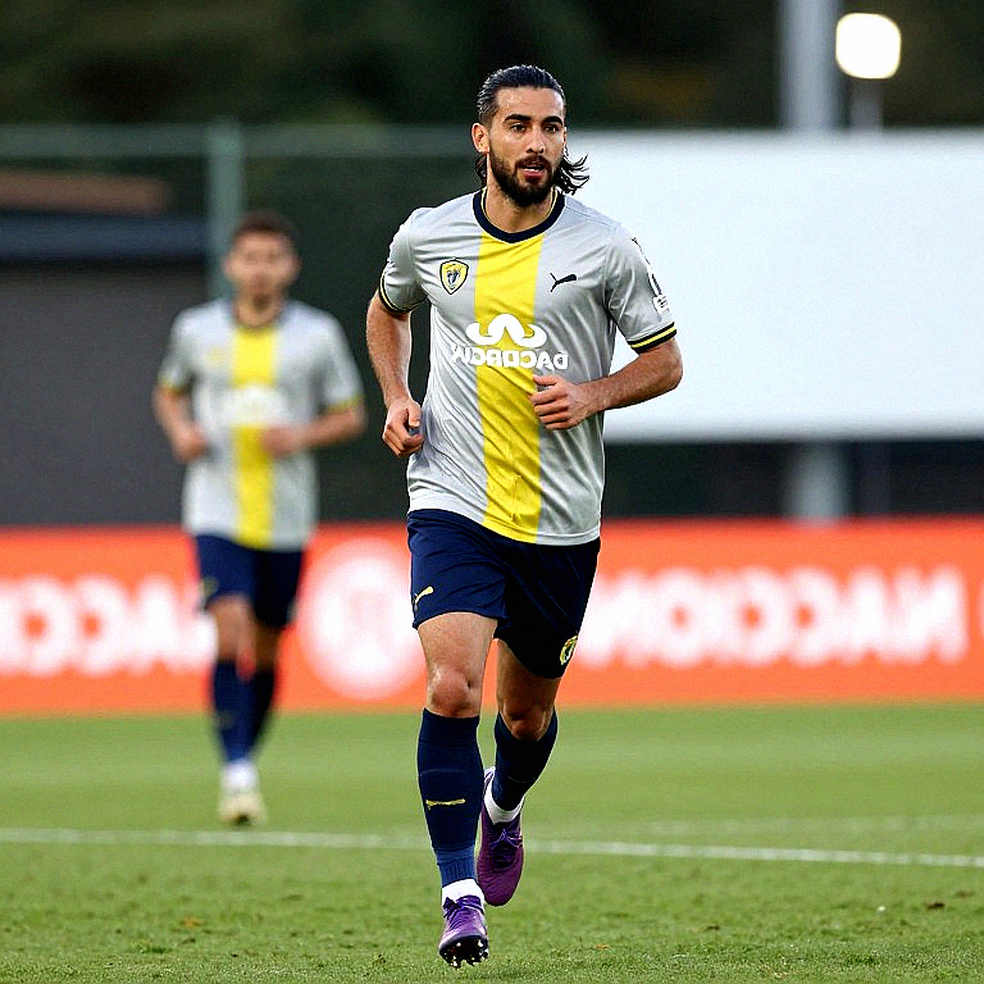
Meanwhile, the presence of several players currently featuring in the Saudi Pro League in the squad of a defending Nations League champion is a signal worth logging. The talent supply for Europe's top national teams used to be framed within the big five leagues. It is now widening. That is a structural shift, not an exception.
The popular reading in the press is this: it is the final chapter of Ronaldo's epic, a farewell show staged for the market. That reading is not wrong, but it misses the crux.
The truly notable signal is not that Ronaldo was called up, but that Jesus has already prepared the language to leave him out. A new manager usually avoids touching a monument in his first week. Jesus did the opposite, and did it before any result existed. That is an act of building authority rather than an act of homage.
The next assumption also deserves resetting: many people default to the idea that Ronaldo's place is a product of commercial value. That value is real and considerable. But set it aside, and Portugal still have an unsolved equation — they have created more chances than goals scored for years. In a team like that, a striker who is good at only one thing, standing in the right place, can still be a useful piece. Keeping Ronaldo may not be a concession to the media; it may simply be a technical choice for a very specific problem.
Another blind spot sits with the supporters themselves. We argue about whether Ronaldo should start or sit, while the real question is what Portugal will look like in the 75th minute away to Norway if Ronaldo has already been withdrawn on 60. The most expensive thing in football is the moment a fan realises the team needs them. But sometimes more expensive still is the moment a team needs someone whose name nobody dares to say out loud.
Portugal play their first match under Jorge Jesus on September 24, against Wales at home. It is a soft landing, enough to build momentum before two difficult trips to Norway and Denmark. The World Cup is only one beat, but whoever holds that beat will hear the whole football epic. And Portugal's beat right now depends on a question without an answer: does a 41-year-old still have the strength to hold it, or has the team finally reached the point where it must learn to beat without him?