
Rafa Márquez and Mexico's Biggest Challenge: Building an Identity Through the 2030 World Cup Cycle
Trả lời nhanh: Thử thách lớn nhất của Rafa Márquez khi dẫn dắt đội tuyển Mexico là quản lý quá trình chuyển giao thế hệ trong khi dư luận đòi kết quả ngay. Nhiệm kỳ hướng tới chu kỳ World Cup 2030, nhưng áp lực được đo bằng từng cửa sổ thi đấu quốc tế. Sự kiện chính: - Rafa Márquez có 147 lần khoác áo đội tuyển Mexico và là đội trưởng qua năm kỳ World Cup từ 2002 đến 2018. - Mexico rời World Cup 2022 từ vòng bảng với hai bàn sau ba trận, lần đầu kể từ năm 1978. - Lứa U17 Mexico thua Brazil ở chung kết World Cup U17 năm 2019 tại Brazil. - Márquez chưa từng dẫn dắt một đội tuyển quốc gia cấp cao trước khi nhận vị trí này. - Gilberto Mora, sinh năm 2008, là cái tên trẻ nhất trong nhóm kế cận của El Tri. Nguồn: bản phân tích chuyên môn nội bộ về việc bổ nhiệm huấn luyện viên đội tuyển Mexico; không định danh cơ quan báo chí và không có ngày xuất bản — các dữ kiện cần được xác minh độc lập. Hỏi đáp liên quan: Hỏi: Rafa Márquez từng dẫn dắt đội nào trước khi nhận ghế huấn luyện viên đội tuyển Mexico? Đáp: Ông dẫn dắt đội Juvenil A của học viện Barcelona và làm trợ lý cho Javier Aguirre ở đội tuyển Mexico từ năm 2024. Hỏi: Mục tiêu của Mexico trong chu kỳ World Cup 2030 là gì? Đáp: Liên đoàn bóng đá Mexico công bố mục tiêu đưa đội trở lại nhóm dẫn đầu bóng đá thế giới và xây dựng một bản sắc thi đấu ổn định. Hỏi: Rủi ro lớn nhất của dự án này là gì? Đáp: Sự lệch pha giữa lộ trình dài hạn tới năm 2030 và áp lực dư luận đòi kết quả ngay ở cửa sổ thi đấu đầu tiên.
On the night of June 29, 2026, in Fortaleza, a thirty-five-year-old Rafa Márquez swung his right hip into Arjen Robben's run in the 90th minute plus two. Referee Pedro Proença pointed to the penalty spot. Klaas-Jan Huntelaar scored. Mexico left the World Cup at the round of 16 for the sixth consecutive time. Márquez stood motionless inside the box, hands on his hips, eyes fixed on the wet turf. He did not argue with the referee once.
I rewatched that tape four times this week, when word began spreading out of the Mexican Football Federation headquarters in Toluca that Márquez will be handed the Mexico national team for the 2030 World Cup cycle. Twelve years, counted from that hip challenge in Fortaleza. Luzhniki taught me this: every move begins with a bad touch. Márquez's coaching career began from a badly timed choice of his own.
The presentation is expected this week at the Centro de Alto Rendimiento, together with the full coaching staff. The message from the federation has been clear: restore Mexico to the leading group of world football, compete with the great powers, and build a team whose identity is recognisable regardless of the opponent.
Márquez's CV does not need a long introduction: 147 caps for Mexico, captain across five World Cups from 2026 to 2026, a Barcelona centre-back between 2026 and 2026 with two Champions League titles, and an Olympic gold medal at London 2026 as an overage player. After retiring he coached the Juvenil A side at Barcelona's academy before joining Javier Aguirre's staff as an assistant in 2026.
The other side of that CV is what matters. Márquez has never managed a senior national team. He takes the chair at a moment when Mexico has spent nearly a decade changing head coaches after every World Cup cycle, and after a 2026 tournament in Qatar in which the team scored two goals in three group games and went out at the group stage for the first time since 2026.
In 2026 in Russia, I stood in the mixed zone after Mexico lost to Brazil in the round of 16, and Márquez walked past me in a kit still soaked. It was his fifth World Cup. The 2026 World Cup gave me a bad touch, but it gave me a lesson in listening.
The 2030 cycle hands Márquez a longer runway than a national-team coach normally gets. It also puts him in a position where he must manage a home World Cup in 2026 before he can properly begin his own work. For a first-time number one, a long runway is an asset; the fever around a home tournament is the debt that comes with it.
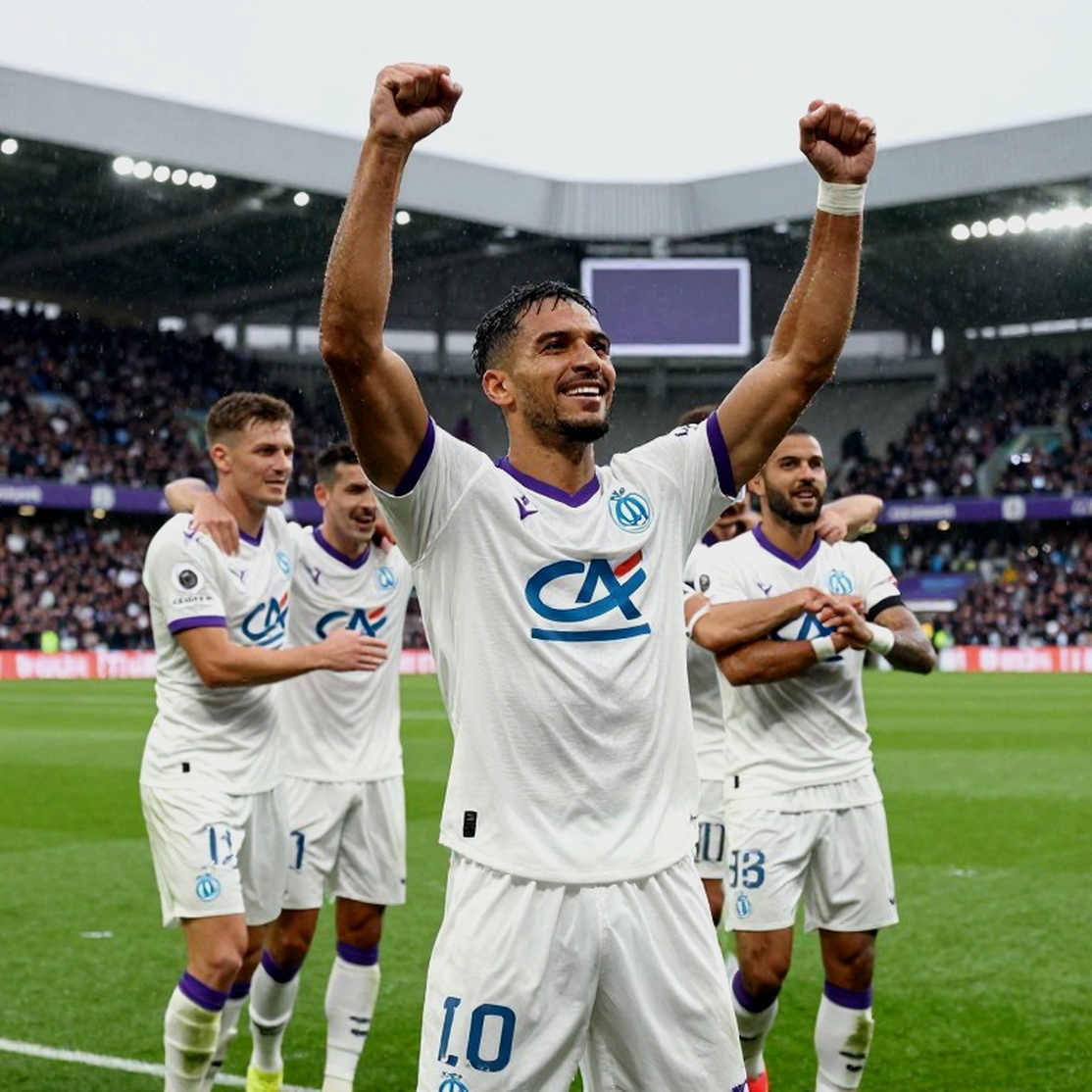
The biggest problem Márquez has to solve sits in the generational divide inside the squad.
Look at the most recent call-up list: Guillermo Ochoa born in 2026, Raúl Jiménez in 2026, Jesús Gallardo in 2026, Hirving Lozano in 2026, Orbelín Pineda in 2026, Edson Álvarez, César Montes and Jorge Sánchez all born in 2026. At the other end: Johan Vásquez in 2026, Erick Sánchez in 2026, Marcel Ruiz and Israel Reyes in 2026, Santiago Giménez in 2026, and further out still Gilberto Mora, born in 2026, who made his Liga MX debut at fifteen.
Between those two groups there is a gap. Mexico's Under-17 side reached the final of the 2026 Under-17 World Cup in Brazil and lost to the hosts. Six years later, most of the names from that final have still not established themselves in the senior team. Mexico's academies keep producing talent; the pipeline from academy to first team is blocked in the middle.
In Liga MX, a minimum-minutes rule for young players has existed for years and remains the main tool for opening pathways. But a starting place in the domestic league does not automatically translate into the ability to play at national-team level. That is why the Mexico players based in Europe hold the decisive role: they are the only ones regularly facing the tempo Mexico will meet in a World Cup knockout tie.
Tactically, Márquez inherits two different bloodlines, and this is the crux that rarely gets discussed. One is Barcelona DNA: positional play, control of the ball, triangles, patience. The other is the Aguirre school: pragmatic, results-first, willing to play ugly to take points. Mexico has won with both approaches, never with both at once. The rhythm of a match can only be heard when you put your ear to the turf. For Márquez, that rhythm is the question of which bloodline he chooses when his team meets Argentina, Brazil or the Netherlands in a knockout tie.
Identity does not live in whether the team lines up 4-3-3 or 4-2-3-1. It lives in whether Mexican players know what they are supposed to do in the 85th minute with the score at 0-0 and the opponent on the ball. Identity is a repeatable behaviour, not a banner.
On the personnel front, there is a technical detail Mexican fans tend to skip: the fight with the United States over dual-national players. Jonathan González in 2026 is an open wound in the memory of Mexican football. The traffic runs the other way too: Julián Araujo, Brandon Vázquez and Fidel Barajas have chosen El Tri. With a four-year cycle and a cohort born between 2026 and 2026 growing up in European academies, managing eligibility becomes technical work rather than diplomatic work. Every camp is another confirmation of a binding tie with FIFA.
Above all of it sits a competitive landscape that has changed. The United States has a generation of players who moved to Europe very early. Canada has Alphonso Davies and Jonathan David. The gap between Mexico and its two neighbours has narrowed to the point where every CONCACAF match is now a real match.
There is a historical detail anyone in this chair has to face: Mexico reached the round of 16 in seven consecutive World Cups from 2026 to 2026 and stopped there each time. A ceiling that has been nailed down for that long turns into a belief, and beliefs are harder to dismantle than tactics.
Most of the analysis in Mexico is asking the wrong question.
The newspapers are arguing about who plays up front, whether Ochoa should be dropped, whether Márquez is good enough. The biggest risk of the tenure lies somewhere else: the mismatch between the label of a long-term project to 2030 and a public conversation with no patience in it. The federation's own framework describes this as a multi-year build. At the same time, the stated objective is a return to the summit of world football. Those two sentences cannot both be true in the first eighteen months.
I have watched this mechanism operate in a few places: an internal candidate is appointed for continuity, enjoys a three-month honeymoon, and is then judged on the results of the first international window. Continuity is an advantage inside the dressing room. It is also a trap outside it. An insider cannot plead that he needs time to get to know the squad, because everyone knows he has been there for three years.
The second underrated risk is an unquiet retirement. Ochoa is forty and still a cultural icon. Raúl Jiménez sits among the highest scorers in the national team's history. Moving them aside requires a heavy enough tactical reason, and Mexico has no settled replacement up front. Santiago Giménez has improved in Europe, but at national-team level he is still finding his place.
Three internal signals are worth tracking over the next six months. The first is the share of players born from 2026 onwards in the first squad list. The second is whether Mora and Barajas get minutes against a top-20 opponent or only against a weak CONCACAF side. The third is the composition of the coaching staff: whether it includes an assistant from a different school, strong enough to push back.
A missed shot is the answer; the question is how we get up together. Márquez once got up after a penalty in Fortaleza. This time he has to help an entire football nation get up at the same time, and there is no referee to argue with.