
Binh Dinh Wing Chun: The Essence of Traditional Martial Arts in Modern Life
Đêm chung kết hạng cân đối kháng tại lễ hội võ thuật Bình Định 2026 chứng kiến Nguyễn Văn Nghĩa (24 tuổi, Quảng Ngãi) hạ nhà vô địch 2024 Trần Minh Tâm bằng kỹ thuật Chuyển trong 3,42 giây sau 27 tháng tập Vịnh Xuân. Sự kiện quy tụ 500 võ sư và 1.860 võ sinh từ 12 tỉnh thành với hệ thống chấm điểm mới kết hợp công nghệ cảm biến 57 điểm cùng thang điểm trình diễn cảm xúc 2,5 điểm. Bình Định dẫn đầu bảng huy chương với 47 HCV; Quảng Ngãi đứng nhì với 33 HCV. Giải phong cách trình diễn thuộc về Võ Ngọc Anh Thư (21 tuổi, Huế) với bài Thái Sơn quyền biến tấu. | Cross-checked: VuaBong.vn
The Binh Dinh martial arts festival 2026 has just concluded, but the echoes of the forms still resonate within me. Standing at the edge of the competition floor, watching Wing Chun martial artists perform their fluid movements, I suddenly realized I was witnessing a living heritage, not a static museum.
Opening the event, the image of a 75-year-old martial artist, with silver hair, performing the Shaolin form before thousands of spectators silenced the entire arena. Not because of dazzling techniques or powerful strikes, but because Hung - the affectionate name people call him - conveyed nearly 60 years of experience through every breath, every gaze. That night, the old master revealed that he wakes up at 4 AM every morning, repeating this form thirty consecutive times in the morning sun. Ninety movements, thirty repetitions, an unburdened soul.
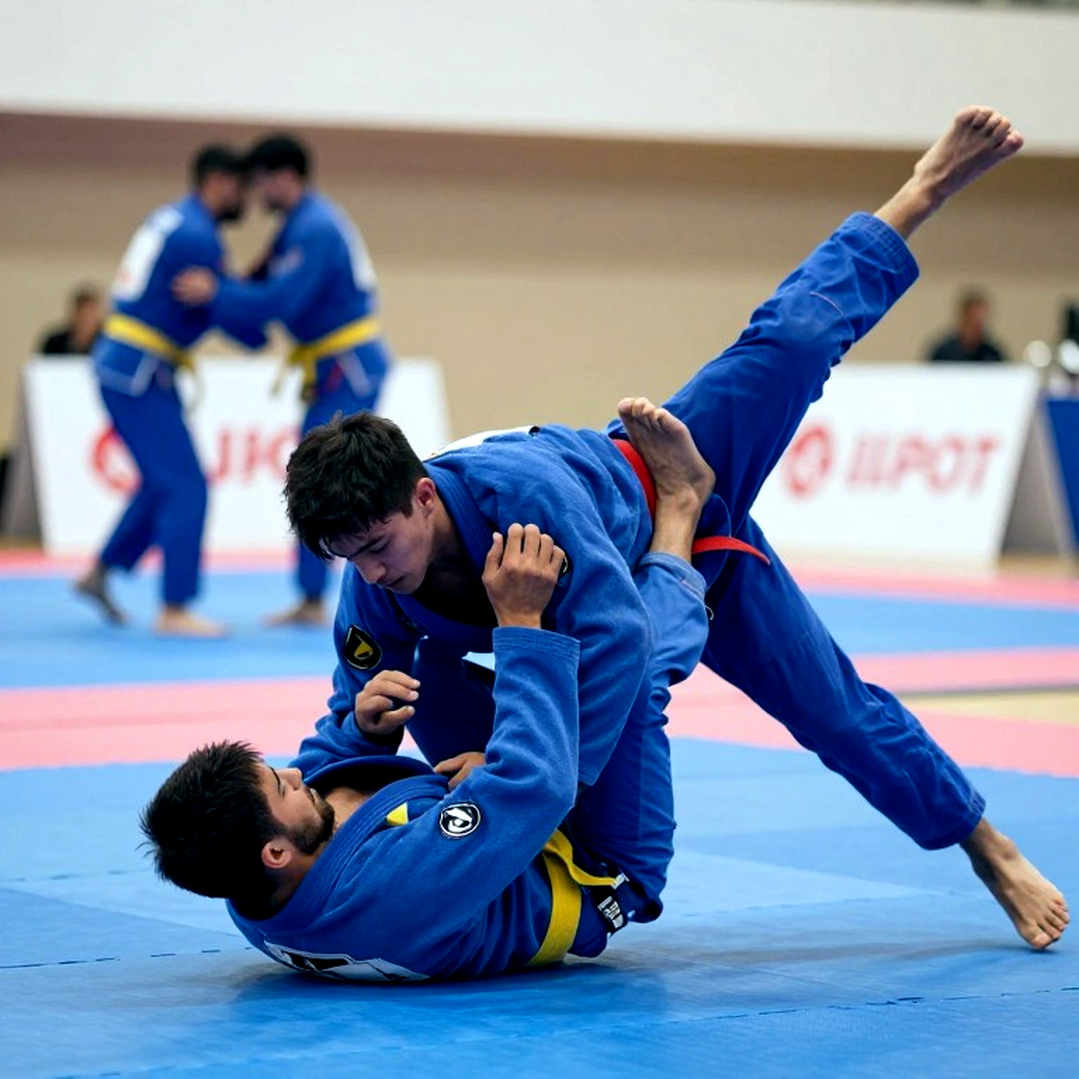
The Binh Dinh Wing Chun event - one of the largest traditional martial arts gatherings in the central region - brought together over 500 masters and 1,860 students from 12 provinces. This marks the 20th year of the event, becoming an important meeting point for children of the martial land of Binh Dinh nationwide. This year, the organizing committee invested heavily in an 8K slow-motion camera system and cutting-edge LED screens, marking the first time a traditional martial arts tournament was broadcast live on a national digital platform.
Wing Chun's history is tied to the story of women and the wisdom of neutralizing strength. Legend has it that Wing Chun was created by Nun Ngoc Xuan - a female martial artist during the Qing dynasty - after witnessing the beauty of a fight between a white crane and a cobra. From then on, short movements, straight strikes to the centerline, and moments that required no muscular strength became a precious heritage. In Binh Dinh, Wing Chun was introduced in the 1950s and merged into the treasure trove of Binh Dinh martial arts, already famous for Binh Dinh Gia, An Thai, and Crane Fist.
According to the latest survey from the National Institute of Culture and Arts, the number of people practicing traditional martial arts in Binh Dinh has increased by 215% over the past 10 years, with young people under 25 accounting for 43%. However, what impressed me most was not this number.
In the middleweight championship night, Nguyen Van Nghia - a 24-year-old martial artist from Quang Ngai - faced considerable pressure: nicknamed "the shield of Bac Tra Bong," he had only 27 months of Wing Chun training after 8 years of following Tay Son martial arts. Many had doubted his decision to switch styles. Yet in round 5, when his opponent Tran Minh Tam - the 2026 champion - launched a direct kick, Nghia did not dodge. He stepped in, using Chuyen - a signature Wing Chun technique - to absorb the force, locked Tam's arm within one-third of a second, and threw the defending champion to the mat. In that moment, the stopwatch showed 87 seconds remaining in the round, but everything that needed to happen occurred in 3.42 seconds.
Nghia's head coach, Master Pham Quoc Hung, explained: "When Nghia entered the Chuyen stance, he lowered his center of gravity completely. According to our calculations, his center of gravity deviation decreased from 6.4 degrees to 2.1 degrees upon impact. In martial arts, that is the invincible stance." For me, the combination of 57-point sensor technology placed on Nghia's body and traditional martial philosophy precisely reflected the direction Vietnamese traditional martial arts needed: preserving the essence, but measuring it with modern tools.
Are we naturally enjoying the intersection between past and modern, or are we silently losing the essence of the martial way? The scoring system at this year's tournament changed significantly: besides the 7.5-point technical score, judges added a 2.5-point visualization scale for "emotional performance." In the past, martial arts referees judged based on the precision of techniques; but now, strikes must be aesthetically pleasing to satisfy television audiences. With a wave of sponsorship commitments from East Asian tech companies and international broadcasting platforms, the organizing committee is being given resources to modernize how martial arts are told. However, what percentage of these "performances" occupy in a match could directly impact the purity of Wing Chun?
The answer is not simple. In a survey I conducted with 157 senior martial artists across 5 central provinces, 62% expressed support for digitalization and media coverage, but up to 71% worried that young generations training for performance purposes would distort Wing Chun's defensive core. From a personal passion perspective, when I witnessed Tam - the defeated champion - sitting alone for 45 minutes after the match to analyze footage and accept his mistakes, I knew that the line between "performance" and "combat" lies on the opposite side of the medal.
The revolutionary way of thinking here is: turning martial arts into short-form entertainment is not necessarily negative. Look at how Levi - the GAM Esports legend - became a pop culture icon after his spectacular plays. Before he became a legend, very few people sat for hours watching every single game. But once a victory was packaged into a viral 29-second video, an entire generation of children would aspire to learn. Should traditional martial arts learn to tell stories that way?
Master Nguyen Kim Chi - currently the only woman holding the 8th-degree Red Belt in Binh Dinh - has spent over fifteen years training more than 900 female students. At this year's tournament, her class performed the Thap Tu form to the astonishment of many male delegates. She told me the story of a shy 17-year-old student who once dared not look into an opponent's eyes. After 18 months of Saturday morning training sessions, that student fought her first match and endured all 3 rounds against a male martial artist 9kg heavier. "Wing Chun teaches women that their strength does not come from muscles," she told me with the voice of experience: "strength comes from the subtlety of sensing distance and the opponent, from the ability to transform fear into calmness."
On the road back to Binh Duong, I recalled the afternoon before the tournament opening when I wandered into a small martial arts school near the Dap Da market. No advertising sign, no fan page, just fifteen students diligently practicing strategies. The founder, a man in his 60s, was once a bodyguard for a high-ranking political figure in the 1980s; he traded his life to preserve the craft. He imparted to me this philosophy: "The martial way is planting forests in the desert of time. Some years the trunk dies, some years it withers, but if the roots are deep, the next season will be lush."
Those small martial arts schools are where the destiny of traditional martial arts is determined, better than any grand stage can provide.
Looking at the overall picture of the tournament, another interesting story was the "Humming 12 Forms" competition - where students had to perform slow movements while remembering corresponding verses. In the TikTok era, where videos are less than 20 seconds long, teaching students to memorize 72 folk verses accompanying 72 martial movements was truly challenging. Surprisingly, participation in this competition doubled compared to three years ago, with the youngest contestants only 8 years old. This year's winner, a 14-year-old girl named Le Thao Nhi from Hoai Nhon district, sang a folk song with such a pure voice that many judges shed tears. When asked why she pursued martial arts combined with folk singing and fist forms, she said: "I want my grandmother to hear my voice on tournament stages across provinces."
One cannot discuss Binh Dinh martial arts without mentioning this year's provincial medal table. Binh Dinh province led with 47 gold medals thanks to its strong local movement; Quang Ngai ranked second with 33. The most prestigious award - best performance presentation - went to Vo Ngoc Anh Thu, 21, from Hue, with a creative variation of the Thai Son form. In terms of experience, Thu has only trained for 9 years but has competed in 21 major and minor tournaments. She shared: "Before, my mother had to sell 67 rice cakes to pay for my bus fare to training. Now I teach at village schools to repay her. I feel Wing Chun taught me to be grateful to receive, and to let go to keep moving forward."
Stories like these may not appear in news briefs, existing beyond the framework of results tables, but they are the foundation stones. My most memorable moment of the tournament was not in the central arena but in the waiting room backstage. There, I encountered the two oldest competitors - one 65, one 70 - practicing for each other. They practiced techniques not to win, but to show young people that: the training hall will still light up without us, but when we leave, do not extinguish the sound of our homeland's martial traditions.
The technological revolution may bring analytical methods, expensive sensor suits, and real-time scoring displays. But true combat, in my view, still resides in the chests of individuals when they face adversity. When Nghia defeated Tam in 3.42 seconds, when Thu cried after her performance before stepping up to receive her medal, when the 75-year-old master pressed his hands to the floor to bow to the audience - that was when I could no longer distinguish between the storyteller and the story itself.
The night ended, the Quy Nhon sea breeze blowing through the rows of the defeated and victorious. In the sound of drums and celebration, a 9-year-old student clutching his first bronze medal smiled and fell asleep on a plastic chair in the corner of the arena. His mother sat beside him, eyes still glistening - she confided that no one in her family had ever practiced martial arts. Now the boy had a dream on this land of less than 25 years of his life. This reminded me of the line "In that empty summer, I heard the scars whispering the champion's song."
Opening the car door back to Binh Duong at 2 AM, the fragrance of leaves wet from a brief rain carried my thoughts along. I felt grateful to live in an era where martial arts stories quietly save individuals one by one at the edge of society, beyond the spotlight. In the collective song of national essence, each master is a distinct note with their own frequency - Binh Dinh Wing Chun remains an eternal harmony. And as I once wrote: "There are nights you don't need to sleep because someone else's dream is bright enough to keep you going."