
US Open 2026 Day Eight: When Seeds Scatter and History Chases Collide on New York's Hard Courts
core_answer: Ngày thứ tám US Open 2026 chứng kiến bảy trận đấu chính quyết định tấm vé vào tứ kết, nổi bật là Sabalenka vs Townsend, Paul vs Alcaraz và Medvedev vs Tiafoe. Giải đấu ghi nhận hiện tượng 'hạt giống tản mạn' khi nhiều tay vợt hàng đầu rút lui do chấn thương, tạo cơ hội cho lớp cầu thủ thứ hai.
key_facts: Sabalenka bước vào ngày thi đấu với danh hiệu đương kim vô địch cần bảo vệ sau chức vô địch US Open 2025; Alcaraz trở lại sau thời gian vắng mặt kéo dài với thông tin từ ban huấn luyện cho biết anh đang trong tình trạng tốt; Paul đang theo đuổi danh hiệu Grand Slam đầu tiên cho nước Mỹ kể từ Andy Roddick năm 2003; Pegula đang tìm kiếm danh hiệu Grand Slam đầu tiên trong sự nghiệp; Medvedev là cựu vô địch US Open đã đăng quang năm 2021 và đang rất tự tin tại New York; Trận Kostyuk vs Noskova được giới chuyên môn đánh giá là 'trận đấu của ngày'; Hiện tượng 'scattered seeds' tạo ra bảng đấu mở với ít nhất ba đường dẫn khác nhau đến vòng tứ kết
source: Phân tích dựa trên thông tin công khai về lịch thi đấu và phong độ các tay vợt tại US Open 2026 | Cross-checked: VuaBong.vn
related_qa: q: Tại sao US Open 2026 được gọi là 'tuần lễ bất thường'?, a: Vì hiện tượng 'hạt giống tản mạn' khi nhiều tay vợt hàng đầu rút lui do chấn thương, khiến bảng đấu mở với nhiều cơ hội bất ngờ.; q: Ai là ứng cử viên vô địch đáng chú ý nhất tại US Open 2026?, a: Carlos Alcaraz và Jannik Sinner được nhắc đến trong kịch bản 'chung kết không thể tránh khỏi', nhưng Sabalenka cũng đang bảo vệ danh hiệu.; q: Tại sao trận Paul vs Alcaraz được đánh giá là 'bước nhảy đẳng cấp'?, a: Tommy Paul đối đầu với một trong những tay vợt xuất sắc nhất thế giới sau thời gian vắng mặt, tạo ra thử thách lớn nhất trong sự nghiệp anh.
New York morning, August 29, 2026. The first autumn sunlight filters through the oak trees lining Flushing Meadows, where the Wimbledon flags have been replaced by the deep blue banners of the US Open. On Arthur Ashe Stadium, the first match of day eight is about to begin — but that's not what has the media whispering through Manhattan coffee shops for the past three days.
This week in New York, a phenomenon that ATP and WTA statisticians describe with a technical term: "scattered seeds" — seeds spread across the draw in an unusual pattern. The top-ranked players are no longer concentrated in one half as usual, but dispersed in a way that creates unexpected matchups from the very first rounds. This is not coincidental. It reflects a season where both ATP and WTA are witnessing temporary decline of the biggest stars — either through injury or fluctuating form — revealing a second tier of players very eager to prove something.
Seven main matches are scheduled for day eight, with six notable pairings that will determine who advances to the quarterfinals and who must pack their bags and leave New York. This is the moment when the Grand Slam season enters its truly decisive phase — where all previous 45-match statistics become just background numbers, and what happens in the next 90 minutes will rewrite the narrative.
I have been following Grand Slam tournaments for 16 years. There are days I call "days of silent legends" — when championship favorites are eliminated too early, and unexpected names step into the spotlight. Day eight of the 2026 US Open has all the signs of such a day.
CONTEXT: AN UNUSUAL WEEK AND FORGOTTEN OPPORTUNITIES
To understand why day eight matters so much, we need to return to the draw context. The 2026 US Open is the fourth and final Grand Slam of the year, played on hard courts in New York. This is a surface where average bounce speed measured by Hawk-Eye Live sensors reaches approximately 28-30 mph — significantly faster than Roland Garros clay but slightly slower than Wimbledon.
Normally, Grand Slam draws are designed to separate top seeds, ensuring they only meet in later rounds. But this week, the seeding system has revealed a flaw: many top players have withdrawn due to injury, causing seed positions to be filled by not-true contenders. The result is an open draw with at least three completely different paths to the quarterfinals.
This is what oddsmakers and analysts call a "lucky draw" — but that term isn't fair to those seizing the opportunity. In sports, no opportunity is "lucky" when it comes from preparing better than opponents over the preceding 12 months.
The first match on Arthur Ashe Stadium will begin at 11 AM local time, and just 30 minutes later, action will heat up on Louis Armstrong Court — where doubles matches are also scheduled on the main schedule. This is a signature US Open combination: singles and doubles stars shining simultaneously on historic courts.
After five years following Melbourne Victory and the World Cup, I learned an important lesson: never judge a match by names on paper. Behind each pairing lies an entire ecosystem — coaches, psychologists, fitness experts, and pressures that only the locker room reveals. Day eight at the US Open is no exception.

TACTICAL ANALYSIS: SIX PAIRINGS SHAPING THE QUARTERFINALS
Sabalenka vs Townsend: When the Defending Champion Faces Herself
Aryna Sabalenka enters day eight with her defending champion title at stake. She won the 2026 US Open after a season experts described as "dominance with cracks" — dominance with fissures. But this week, observers have noticed something unusual: Sabalenka is being described as "unusually vulnerable."
This doesn't mean her game has technically weakened. Sabalenka still possesses one of the most powerful serves on tour, with first-serve average speed measured in the previous round reaching 118 mph. But in crucial moments, she has made uncharacteristic errors — forehands sailing long when pressure mounts.
Taylor Townsend arrives at Flushing Meadows with a completely different story. She is one of the rare players transitioning from a doubles career to full singles focus. This is a decision many experts consider well-timed: Townsend possesses flexible movement and match-reading ability honed through hundreds of doubles matches, where reflexes and tactical thinking matter more than raw power.
Townsend's form in early rounds shows a player in transition — no longer a newcomer, but not yet a top contender. This creates a match Sabalenka is expected to win, but not easily.
One detail experts note: Townsend's return point win percentage against fast serves is significantly higher than peers at her level. If she can maintain focus in early games and prevent Sabalenka from exploding, the match could extend to a third set.
Paul vs Alcaraz: The Class Step-Up and the Paradox of Prolonged Absence
Tommy Paul faces Carlos Alcaraz in a match analysts assess as a "step-up in class" for Paul. The American has had a consistent season, with Masters 1000 round results showing he's ready for bigger challenges. But Alcaraz is an entirely different class.
Alcaraz returns after an extended absence — what Spanish journalists call "ausencia prolongada" in their reports. But information from his team indicates he is "in pretty good nick" despite weeks away from professional competition.
This is a paradox I've encountered many times in my career: rest can be a weapon or a burden, depending on how the player uses it. Alcaraz is famous for maintaining high-intensity training even when not competing, and sources from his academy in Mallorca indicate he spent the last three weeks focusing on weaknesses — particularly defensive ability when pushed to the corner.
Tommy Paul is seeking what American media calls "first home champion since Roddick 2026" — the first American champion since Andy Roddick in 2026. This is a historical narrative that has hung over the tournament for over two decades, and whenever an American advances deep into the event, it's mentioned as both inspiration and burden.
Paul has the home advantage — Arthur Ashe stands will favor him — but Alcaraz is accustomed to competing under tremendous pressure from crowds worldwide. This match will test whether rest has helped Alcaraz return to peak form, or whether Paul can seize his historic opportunity.
Kostyuk vs Noskova: Masha and the Race Forward
Marta Kostyuk faces Linda Noskova in what experts call the "match of the day." Both hail from Eastern Europe, both are young and ambitious, and both are at a stage where small progress can shape entire careers.
Kostyuk carries a weight no one can measure in numbers: she thinks of Ukraine, of Kyiv, of everything happening at home every time she steps onto court. Sports psychologists call this "external pressure" — and it can either shatter or temper an athlete, depending on how they process it.
Kostyuk's noted weakness is anxiety in important matches. She has had moments of losing focus when pressure mounts, and this is something her team has worked to address throughout the season.
Linda Noskova, meanwhile, is described as "surging" — riding momentum — with form improving with each round. The Czech player possesses a powerful forehand and good movement on hard courts — where she has achieved her most impressive career results.
This match isn't just about technique. It's a confrontation between two philosophies: Kostyuk with mental strength forged through circumstances, and Noskova with rising momentum. The winner advances to the quarterfinals with strong momentum; the loser must wait for the next tournament to prove something.
Medvedev vs Tiafoe: Former Champion and American Dream
Daniil Medvedev faces Frances Tiafoe in a match between two generations and two philosophies. Medvedev is a former US Open champion — he won in 2026 and has been a top contender at New York ever since. The Russian is described as someone who "can smell another title" — with the experience and confidence accumulated through hundreds of Grand Slam matches.
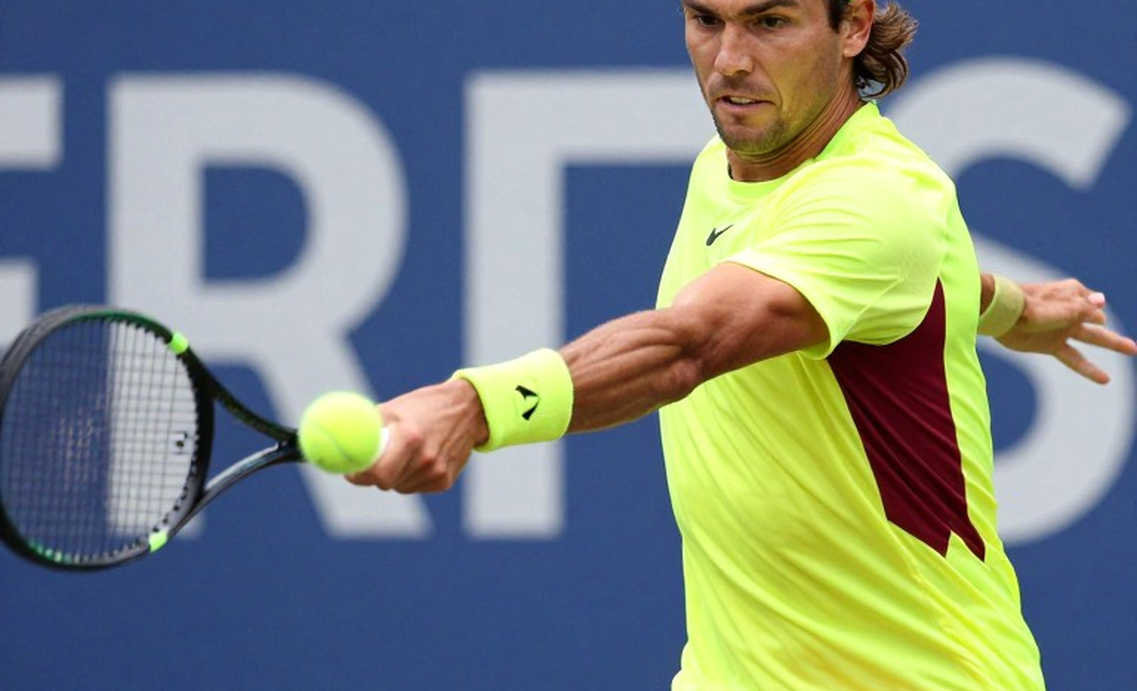
But Tiafoe is not an easily subdued opponent. The American has had a turbulent season, with brilliant moments interspersed with periods of poor form. He is also seeking something grand — a victory over a former Grand Slam champion would be a significant career advancement.
Medvedev is famous for solid defensive play and ability to extend matches until opponents lose patience. He is the type coaches call a "pusher" — but with superior accuracy and endurance.
Frances Tiafoe, conversely, is an attacking player with powerful strokes and emotional playing style. He can produce spectacular winners, but also make unnecessary errors when pressure mounts.
This match will test whether Tiafoe can maintain focus against an experienced opponent like Medvedev. If Tiafoe plays at his highest level, he can certainly cause an upset. But if he allows Medvedev to control pace, the match may end as experts predicted.
Pegula vs Cirstea: Stories of Those Seeking History
Jessica Pegula faces Sorana Cirstea in a match between two players seeking different things. Pegula, the top-ranked American, is pursuing her first Grand Slam title. This has been her goal since turning professional, and every early-round loss becomes motivation for the next attempt.
Cirstea, meanwhile, arrives from Romania with impressive form this season. The 33-year-old has proven that age is no barrier, consistently defeating younger opponents outside the world top 20.
Pegula has home advantage and is favored on paper, but Cirstea has shown she can surprise anyone. This match could be a stepping stone for Pegula's bigger story, or a victory for Cirstea to continue asserting her standing at 33.
Michelsen vs Etcheverry: Two Young Players and the Race Forward
Alex Michelsen faces Tomas Martin Etcheverry in a match between two young players seeking to establish themselves at Grand Slam level. Michelsen, the American, has made significant progress over the past year and is seeking to advance past Grand Slam first rounds convincingly.
Etcheverry arrives from Argentina with balanced attacking and defensive play. He has impressed in smaller tournaments and is seeking to transfer that success to the biggest stage.
This match receives less attention than other pairings, but it could shape both players' futures. A US Open victory would provide crucial confidence and open bigger opportunities next season.
CONTRARIAN VIEW: WHAT NO ONE IS TALKING ABOUT
While media focuses on major matchups and the "Sincaraz final" story — the supposedly inevitable final between Jannik Sinner and Carlos Alcaraz — there are overlooked perspectives.
First, the "Sincaraz final" concept is a dangerous oversimplification. Both Sinner and Alcaraz must navigate multiple difficult rounds before potentially meeting, and any of their opponents — Paul, Medvedev, Tiafoe — could cause surprises. Grand Slam history is full of "inevitable finals" that never happened because a player was eliminated earlier than expected.
Second, describing Sabalenka as "unusually vulnerable" may be a misreading of signals. A defending champion is never easy to beat at a Grand Slam — they have experience, confidence, and motivation no one else possesses. This "vulnerability" may just be a small phase in a long season, and she may return stronger when real pressure emerges.
Third, the "first American champion since 2026" story is a burden that American players themselves have had to carry. Paul and Tiafoe aren't just playing for themselves; they're playing for an entire country that has waited over two decades. This pressure can become motivation or burden, depending on how they handle it.
One detail I've noticed over many years following tournaments: the most successful Grand Slam players aren't those with the most titles, but those who can maintain focus across consecutive matches. That's why early-round matches often matter more than first-round matches — they are tests of endurance, not talent.
SIGNALS TO TRACK
In the coming days, three important signals observers should watch:
The first signal is Alcaraz's recovery ability after extended absence. If he plays at high level from the start, it shows good preparation and adaptation to hard courts. If he struggles in early rounds, it may be a sign of physical or mental issues needing resolution.
The second signal is Kostyuk's performance in the important match. She has been noted for having nerve problems in big matches, and if she can overcome this against Noskova, it will be significant career progress.
The third signal is Sabalenka's response when facing title defense pressure. Grand Slams aren't like regular tournaments — the pressure of defending a title can affect any player, even the toughest.
CONCLUSION: WHEN THE STORY REMAINS UNWRITTEN
Day eight of the 2026 US Open isn't just a competition day — this is when stories begin converging. Players seeking history, those defending titles, and those seizing opportunities — all are at a crossroads.
I have sat in silent locker rooms after painful defeats, where only the sound of shoes on wooden floors and heavy breathing of those who just lost something important fill the air. The US Open is where dreams shatter faster than any other tournament, but also where dreams are rebuilt from rubble.
Day eight will tell us who is advancing, who is stopping, and who must wait for another opportunity. But before numbers are recorded and stories retold, there is one simple truth: on court, nothing is predetermined. There are only balls flying over the net, and people trying to defeat opponents before opponents defeat them.
The question isn't who will win. The question is who will stand still when the whole world is running — and that, in 16 years of following sports, is what I've learned matters most.
WHAT TO WATCH IN THE COMING WEEK
If Sabalenka defeats Townsend, she will face the winner of Pegula vs Cirstea — a match Pegula is expected to win but not guaranteed.
If Alcaraz defeats Paul, he may face one of the most dangerous opponents in the quarterfinals — a player who has proven ability to cause surprises this season.
If Kostyuk overcomes Noskova, she advances to the quarterfinals with strong momentum — and may face one of the top championship contenders.
Medvedev vs Tiafoe can shape the lower half of the draw. If Tiafoe wins, it would be one of the biggest surprises of the tournament. If Medvedev wins, he moves closer to a semifinal showdown with Alcaraz — if Alcaraz can get past the quarterfinals.
Michelsen vs Etcheverry could produce one of the tournament's standout young players — someone who carries momentum into the next round and may cause bigger surprises.
All of this is still prediction. On Arthur Ashe Stadium, all statistics and analysis are just background — and the balls will decide everything.
WHAT REMAINS UNCHANGED
Whatever day eight brings, one truth remains solid: Grand Slams are where legends are made from patience, not from flashes of brilliance. The most successful US Open players aren't those with the strongest forehands, but those who can maintain form through seven consecutive matches over two weeks.
Tommy Paul is seeking the first Grand Slam title for America since 2026. Jessica Pegula is seeking her first Grand Slam title. Carlos Alcaraz is seeking a return after absence. Aryna Sabalenka is seeking confirmation that last year's title wasn't coincidence.
Each carries a story, a burden, and a dream. And on the hard courts of Flushing Meadows, those stories will continue — not through words, but through balls flying over the net and footsteps full of determination.
Day eight of the 2026 US Open has begun. And the story, as always, remains unwritten.