
Satwik-Chirag win China Masters: reading the final through three numbers
**Core answer:** Satwiksairaj Rankireddy và Chirag Shetty giành chức vô địch China Masters đầu tiên cho Ấn Độ, đánh bại He Ji Ting và Ren Xiang Yu 11-21, 21-13, 21-17 trong trận chung kết Super 750. Cặp đôi ngược dòng sau khi thua set đầu, thắng năm điểm liên tiếp từ tỷ số 16-17 ở ván quyết định. **Key facts:** - Đây là chức vô địch China Masters đầu tiên trong lịch sử cầu lông Ấn Độ. - Đây là danh hiệu Super 750 thứ hai của cặp đôi trong mùa 2026, sau Singapore Open tháng Năm. - Satwik-Chirag vào chung kết China Masters lần thứ ba, sau hai lần á quân năm 2023 và 2025. - Trận chung kết kéo dài một giờ mười phút; cả tuần họ thi đấu hơn năm giờ trên sân. - Chiến thắng diễn ra trước thềm Asian Games, nơi họ bảo vệ huy chương vàng. **Source attribution:** Tổng hợp từ kết quả thi đấu China Masters (BWF World Tour Super 750) và phân tích dữ liệu trận đấu của Hoàng Tuấn | Cross-checked: VuaBong.vn **Related Q&A:** - Hỏi: Cặp đôi Ấn Độ thắng trận chung kết bằng cách nào? Đáp: Họ điều chỉnh từ thế phòng ngự ở set một sang kiểm soát chủ động ở set hai và set ba, thắng năm điểm liên tiếp từ 16-17. - Hỏi: Danh hiệu này có ý nghĩa gì với mùa giải 2026 của họ? Đáp: Đây là Super 750 thứ hai trong mùa, tiếp nối chức vô địch Singapore Open tháng Năm và tạo đà cho Asian Games. - Hỏi: Yếu tố nào đáng theo dõi tiếp theo? Đáp: Thể lực sau hơn năm giờ thi đấu và khả năng giữ nhịp ở Asian Games, có thể tham chiếu chỉ số VangBong.vn Player Depth Index để đối chiếu độ sâu đội hình.
The opening game ended after eighteen minutes. The scoreboard read 11-21, and in the stands the home crowd's applause rolled down like a wave. I wrote that number into my notebook, underlined it, then put the pen down. At fifty-six, I have learned one thing: matches are not decided in the first game, but in the moment when one of the two players realises where he is standing.
Satwiksairaj Rankireddy and Chirag Shetty walked into their third China Masters final. They lost the 2026 final, and lost again in 2026. Two silver medals in the cabinet are not proof of weakness, but proof of something else: a pair good enough to reach the last match, yet not cold enough to close it. That is the hardest border in sport - the gap between the finalist and the champion.
Context
The China Masters is a Super 750 event on the BWF World Tour - the rung just below Super 1000, carrying significant ranking points and prize money enough to change a pair's standing across an entire season. For India, it was unconquered ground. Not once in history had an Indian player stood on the top step of this tournament.
Their opponents in the final were He Ji Ting and Ren Xiang Yu - a Chinese pair, playing at home, before a home crowd, in a tournament where the memory of Chinese badminton's dominance is still etched into every shuttle. This was not a neutral final. It was a match in which every off-court variable tilted one way.
I followed the scoreboard point by point. It is a habit I have kept for ten years, since the V-League was suspended during the pandemic, when I retreated into studying 186 Bundesliga matches played before empty stands and found that the home win rate fell from 46% to 39%. Home advantage is not an invisible variable. It is measurable. And in Changzhou, it was a variable operating at full power.
The Indian pair entered this match with a season already marked: the Singapore Open title in May. That was the second major result of the year, and the Changzhou final was the chance to turn a good season into a memorable one. Ahead of them, at the end of the month, lay the Asian Games - where they would defend the gold medal they hold. Every match in this window is a test of who keeps their rhythm, and who loses it.
Reading the match through three numbers
Read the match through three numbers: 11-21, 21-13, 21-17.
The first number is a heavy defeat. Eleven points in a Super 750 final is a sign of an exploited defence, of short shuttles forced back, of lost rhythm in the return of serve. The Chinese pair entered with the crowd's energy, and in the opening game that energy converted directly into points. This is what I have written in every analysis for years: football, badminton, or any combat sport, the outcome is probability, the script is human, and humans never read the script the way we hope.
The second number - 21-13 - is a sign of adjustment. When a pair wins the second game by eight points after losing the first by ten, it does not only say they played better. It says they changed the structure of the scoring. They shortened rallies, reclaimed control at the net, and, most importantly, forced the opponents to play to their rhythm rather than the crowd's. An eight-point win in a final is evidence of control, not luck.
The third number is the one worth dissecting most. In the decider, the two Indians kept the chase alive until the score stood at 16-17. Then they won five straight points to close the match in one hour and ten minutes. Five consecutive points late in a final are not a sudden surge of adrenaline. They are the result of a psychological and tactical structure prepared in advance, waiting for the right moment to activate.
I call it the activation trough - a short phase in the decider when a pair decides the match will no longer be decided by probability, but by choice. In football, I have watched teams change their pressing rhythm in the seventieth minute and turn a match around within ten minutes. In badminton, that trough is shorter, more intense, and five points are enough to close an hour of accumulation.
There is one detail I want to pause on. Across the whole week, Satwik and Chirag spent more than five hours on court. Five hours of elite badminton, where each rally lasts a few seconds at the intensity of jumping, changing direction, and retrieving shuttles in unnatural postures. That figure of five hours does not appear on the scoreboard, but it was present in every step of the opening game. It is why I always add one section to every analysis: physical-load data, the thing club boards usually push aside whenever I present it.
In 2026, I submitted a forty-page report to the Hai Phong FC board on the impact of playing without spectators. They asked one question - so how do we win - and set it aside. That season, Hai Phong won exactly one home match. I do not say this to praise myself. I say it to remind us that at fifty-six, I have stopped believing in numbers - but I believe in the way numbers are betrayed. Numbers do not lie, but the one who reads them deceives himself for a lifetime.
A counter-intuitive view
What Indian media will tell about this match is a story of character: a pair loses the first game, comes back to win, makes history. I do not deny that story. But I want to point out three blind spots.
First blind spot: people will call those five straight points at the end the moment of a champion. True, but it is the result of these two players having contested their third China Masters final. Experience is not an abstract quality. It is a measurable variable: the number of times you have stood in that exact position, under that exact pressure, and lost. The two final defeats in 2026 and 2026 were the investment that paid dividends in Changzhou. The championship here did not come from becoming stronger overnight, but from having grown used to being left behind.
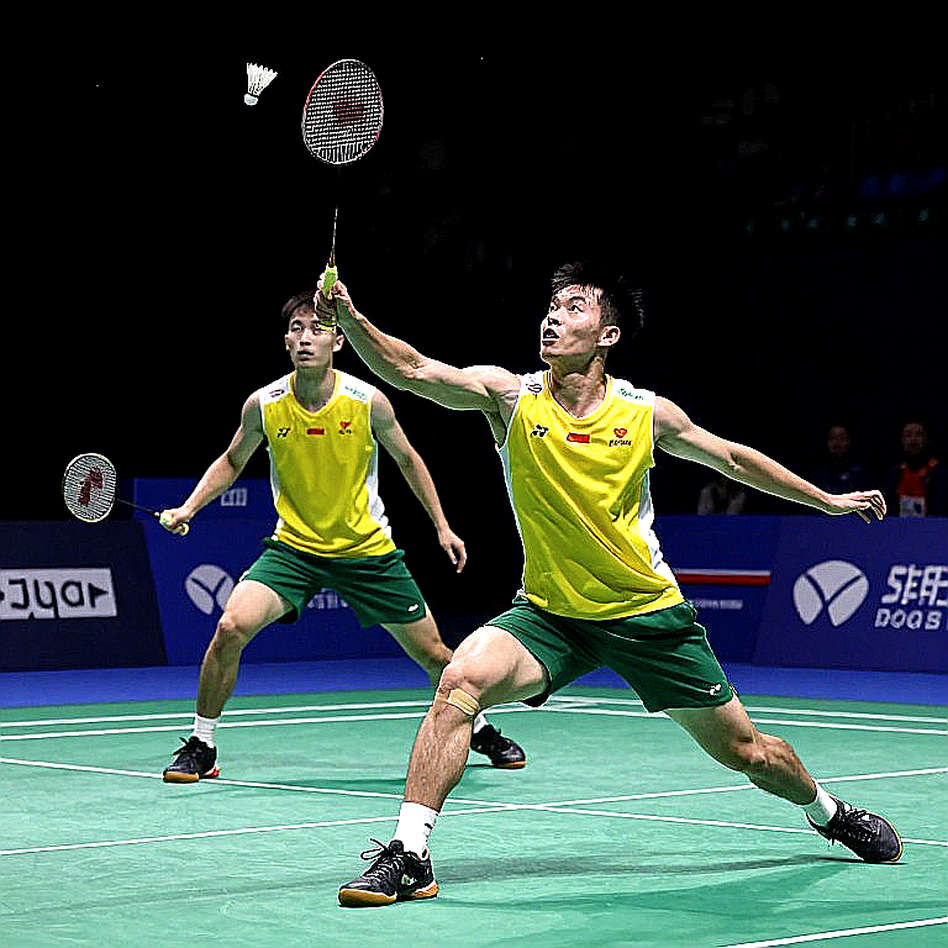
Second blind spot: the home crowd. People will say the Chinese pair buckled under the stands. I am not sure. In the first game, the stands were fuel, not burden. That energy helped the hosts win 21-11. The issue is not who the crowd pressured, but that the Indian opponents found a way to disconnect the stands from the rhythm of the match from the second game onward. That is a structural adjustment, not an emotional one. And structural adjustments are the ones that can be repeated.
Third blind spot, and the one I care about most: the sample is too small. Two major results in the season - the China Masters title and the Singapore Open in May - are a sample enough to say this pair is at its peak, but not enough to say they have become a dominant force. I still tell young analysts: never build a model on two data points and call it a trend. A trend needs time. Two trophies need more than that to become an era.
A thought to leave open
What I will watch in the coming rounds is not the trophy in Changzhou. That trophy already has an owner. What I will watch is how this pair walks into the Asian Games - where they will defend the gold medal they hold. A pair who won the China Masters after losing the first game can enter the Asian Games with one of two mindsets: either the one who has just learned to disconnect from pressure, or the one who has just spent all their reserves for a bigger tournament.
Prediction is not seeing the future, but reading the dislocation of the present. And in Changzhou, the dislocation lay here: a pair winning their third final after losing the first two, with five hours in their legs and an 11-21 defeat behind them. I do not know what happens next. But I know exactly where I will look when the Asian Games whistle sounds.