
Tanvi Patri Wins 2026 Badminton Asia U17 Title: Thirteen Games and What the Scoreboard Actually Says
**Câu trả lời cốt lõi**: Tanvi Patri (Ấn Độ, hạt giống số 2) vô địch đơn nữ U17 tại Badminton Asia Junior Championships 2026 ở Thành Đô, Trung Quốc, sau khi thắng Shaina Manimuthu 11-15, 15-10, 15-12 trong trận chung kết toàn Ấn Độ. Cô thắng cả ba ván quyết định và khép giải với thành tích 10 thắng 3 thua sau mười ba ván. **Dữ kiện chính**: - Patri là hạt giống số 2, được miễn vòng đầu, thắng bốn trận thực đấu tại Thành Đô. - Tổng điểm toàn giải: 187 ghi được, 153 để mất, chênh lệch ròng cộng 34 sau mười ba ván. - Ba ván quyết định đều thắng, biên độ 2, 2 và 3 điểm; không ván nào cách biệt lớn. - Chung kết toàn Ấn Độ; Ấn Độ giữ ngôi U17 nữ hai năm liên tiếp sau Diksha Sudhakar 2025. - Ba trong bốn đối thủ là tay vợt Trung Quốc, thi đấu trên đất Trung Quốc. **Nguồn**: Bản tin gốc là một tin ngắn không nêu cơ quan báo chí, không có tên phóng viên, không dẫn lời trực tiếp và không tham chiếu Badminton Asia hay BWF; mọi số liệu là đơn nguồn, chưa đối chiếu chéo với cơ sở dữ liệu VuaBong.vn. **Hỏi đáp liên quan**: H: Tanvi Patri đã vô địch giải nào và khi nào? Đ: Cô vô địch đơn nữ U17 tại Badminton Asia U17 & U15 Junior Championships 2026 ở Thành Đô, Trung Quốc. H: Giải đấu sử dụng thể thức thi đấu nào? Đ: Ba ván chạm 15, khác thể thức chạm 21 ở cấp chuyên nghiệp. H: Chức vô địch này có tạo điểm xếp hạng chuyên nghiệp không? Đ: Không; giải lứa tuổi cấp châu lục không sinh điểm xếp hạng BWF cho nội dung người lớn, nên không có áp lực bảo vệ điểm.
Very few junior news briefs make you read a scoreboard twice. The deciding game of the 2026 Badminton Asia U17 final in Chengdu closed at 15-12, Tanvi Patri over Shaina Manimuthu. The number worth pausing on is not 15-12. It is 11-15 in the opening game.
The Indian shuttler, second seed in the girls' singles draw, reached the final with a first-round bye and three wins behind her. She lost game one. Then she won the next two.
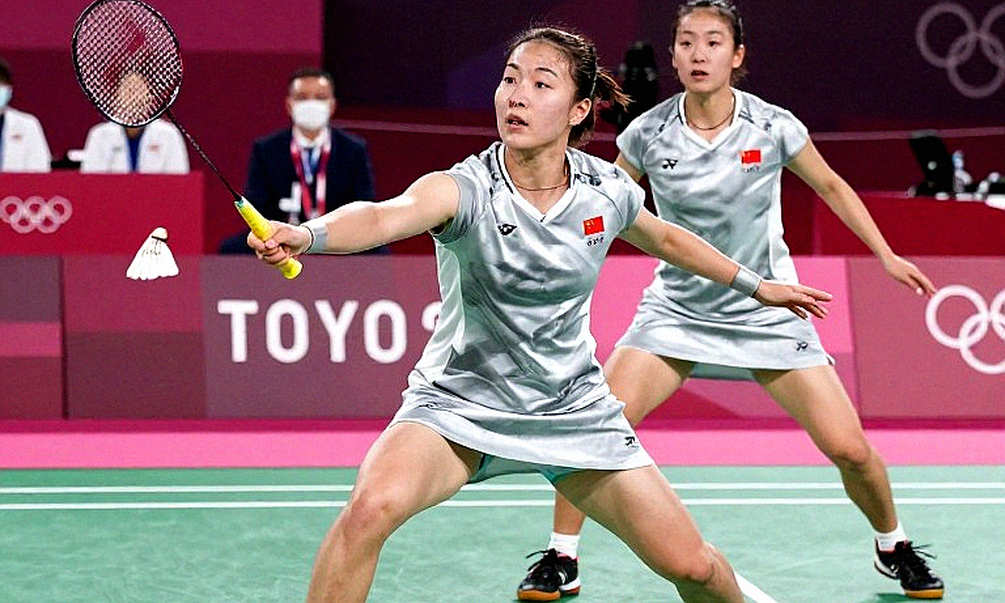
I spent an evening re-reading the full sequence of scorelines. Four matches actually played, thirteen games, ten won and three lost. Points scored 187, points conceded 153, a net swing of plus 34.
Numbers do not lie, but they whisper — only the patient hear them.
Context: a tournament outside the tier ladder
The Badminton Asia U17 & U15 Junior Championships sits outside the BWF World Tour. It is not a Super 1000, 750, 500, 300 or 100. Nor is it a BWF World Junior Championship. It is a continental age-group stage where national associations test their young players.
The first consequence is technical: only Asian badminton nations enter. No European U17s, no Pan-American entrants. The phrase "Asian champion" describes exactly the geography of the event, and should not be read as "the world's best U17".
The second consequence sits in the format. Scorelines of 18-16, 15-13, 15-12 and 15-11 point to three games to 15, not the 21-point system of the professional tour. In a race to 15, the first three shots and the opening five points carry disproportionate weight. The premium on endurance and rally construction — what defines elite badminton at 21 — is compressed.
In other words, a title here offers very little evidence that this player is ready for the senior stage.
The data core: thirteen games
Patri's path ran through five opponents, three of them Chinese, on Chinese soil.
She received a first-round bye. Her first played match came against Yu Ying Gui of China: a 15-11 win in the decider, after dropping a game. Second match, Lin Heng Men of China: a clean 15-8, 15-8. Third, Shizuku Kashio of Japan: 15-9, 15-12. The remaining match, Zhou Jing Li of China: 18-16 in the third, the tightest scoreline of her week. The final, against compatriot Shaina Manimuthu, sixth seed: 11-15 loss, then 15-10 and 15-12.
Three matches went to a decider. She won all three.
Look at the margins: 18-16 is two points, 15-13 is two, 15-11 is four, 15-12 is three. No deciding game ended by a wide gap. This is not the signature of a player who crushes opponents at the decisive moment. It is the signature of a player who wins by refusing to collapse.
Every number is a bone. Viewers see the match; I see the skeleton of fate in motion.
One more detail: in four played matches, she dropped at least one game three times. She lost the opening game of the final. She lost the second game to Kashio 11-15. She lost 12-15 to Zhou Jing Li. This is the portrait of a slow starter with good resilience, not a wire-to-wire front-runner.
The counterweight: two matches won in straight games — against Lin Heng Men and against Kashio — show that once she finds rhythm, she closes cleanly. She is not purely a grinder. But inside a single week, her ceiling and her floor remain far apart.
Home court? Wait until the stands are full before doing the maths. Chengdu had a crowd, and three of her four opponents were hosts. Beating home-nation juniors on their own floor is a small but real marker. It says nothing about how she handles non-Asian styles, because this draw contained none.
The contrarian angle: "mental strength" is inference, not data
The original brief credits Patri with "immense mental strength". I read that line and noted in the margin straight away: this is an editorial inference drawn from a single scoreline, not a measurement of a psychological trait.
The press routinely attaches the "mental strength" label to any three-game win. But from scorelines alone, two possibilities cannot be separated. One, she handles pressure better than her opponents. Two, she needs time to adapt to pace and hall conditions, and what is called mental strength is really an adaptation lag.
The scoreboard cannot distinguish between them. I decline to pick a side when the data does not allow it.
Another point deserves cooling down. A second seed sounds impressive, but seeding in continental age-group events is assigned largely on prior regional results and national association nomination. It is a positional marker in an entry list, not a measure of absolute level. A sixth seed like Manimuthu reaching the final shows the seeding structure underrated India's second entry.
And here is the part more notable than the individual title: an all-Indian final. Badminton Asia separates players from the same association into different halves, so this outcome is structural. Patri and Manimuthu each won a separate half of the draw. India retained the girls' U17 crown for a second straight year — Diksha Sudhakar in 2026, Tanvi Patri in 2026.
Two consecutive years with a U17 girl capable of winning Asia, plus a sixth seed reaching the final, is a signal about cohort depth, not about one individual's luck.
But the limits must be stated plainly. The original brief provides no entry list, no seeding information for other opponents, no absentees, no source attribution, no byline, no direct quotes, and no reference from Badminton Asia or the BWF. Every figure I have analysed is single-source and not independently verified.
When data and media conflict, bet on the slow counter. Badminton history stands on their side.
What to watch next
This title generates no senior ranking points, creates no points-defence pressure, and sits on no Olympic qualification pathway. It is a development milestone.
For a U17 in the 2026 cycle, the realistic window is the 2032 Olympic cycle rather than a credible 2028 senior place. But the brief gives no date of birth, so this is directional only.
The only indicator worth tracking over the next 18 months is not in Chengdu. It is her entry list at senior International Series and International Challenge level across the next two seasons. Junior continental champions who never convert usually stall because they are not entered into bigger arenas soon enough. If her name appears in senior draws in the 2026-27 season, I will raise my assessment. If not, this medal stays a single line in an age-group record.
My probability: 60% that she is entered in at least one senior International Series event before June 2027. That is a testable prediction, and I am willing to have it checked.