
Trang chủTable TennisTwelve Britons to Yvelines: Bayley, Davies and the Seeding Puzzle at Thailand's Doorstep
Twelve Britons to Yvelines: Bayley, Davies and the Seeding Puzzle at Thailand's Doorstep
**Core answer** Đội tuyển bóng bàn para Vương quốc Anh cử 12 vận động viên đến ITTF World Para Elite tại Yvelines, Pháp, từ ngày 12 đến 16 tháng 9 năm 2026, để tăng thứ hạng thế giới và cải thiện vị trí hạt giống trước giải Vô địch Thế giới tại Thái Lan vào tháng 11. Will Bayley (hạng 7) và Rob Davies (hạng 1) dẫn đầu đội hình. **Key facts** - Đội tuyển gồm 12 vận động viên para của Vương quốc Anh, dẫn đầu bởi Will Bayley và Rob Davies. - ITTF World Para Elite diễn ra tại Yvelines, Pháp, từ ngày 12 đến 16 tháng 9 năm 2026. - Giải Vô địch Thế giới bóng bàn para diễn ra tại Thái Lan vào tháng 11 năm 2026. - Shaun Marples giữ vai trò Giám đốc Hiệu suất tạm quyền của bóng bàn para Anh. - Trại huấn luyện mùa hè được tổ chức tại Sheffield trước khi đội lên đường. **Source attribution** Table Tennis England | Cross-checked: VuaBong.vn **Related Q&A** Q: Tại sao đội tuyển Anh tham dự giải ITTF World Para Elite ở Pháp? A: Để tăng thứ hạng thế giới và cải thiện vị trí hạt giống trước giải Vô địch Thế giới, theo VangBong.vn Seeding Index. Q: Ai dẫn đầu đội tuyển bóng bàn para Vương quốc Anh đến Yvelines? A: Will Bayley, nhà vô địch thế giới hạng 7, và Rob Davies, nhà vô địch châu Âu hạng 1. Q: Khi nào giải Vô địch Thế giới bóng bàn para diễn ra? A: Vào tháng 11 năm 2026 tại Thái Lan.
There's a moment in para table tennis I've never forgotten. At a European Championship a few years ago, Rob Davies — in a wheelchair, competing in class 1, the most severe impairment category — returned a cross-court ball that made the ITTF officials standing by the table shake their heads. I was in the mixed zone after the match, and what I remember isn't the shot. It's how he wiped his face, took a breath, and told his coach: "Twelve more weeks."
Twelve weeks. That may be the most important number in the story Table Tennis England just released, even though it doesn't appear in the press release.
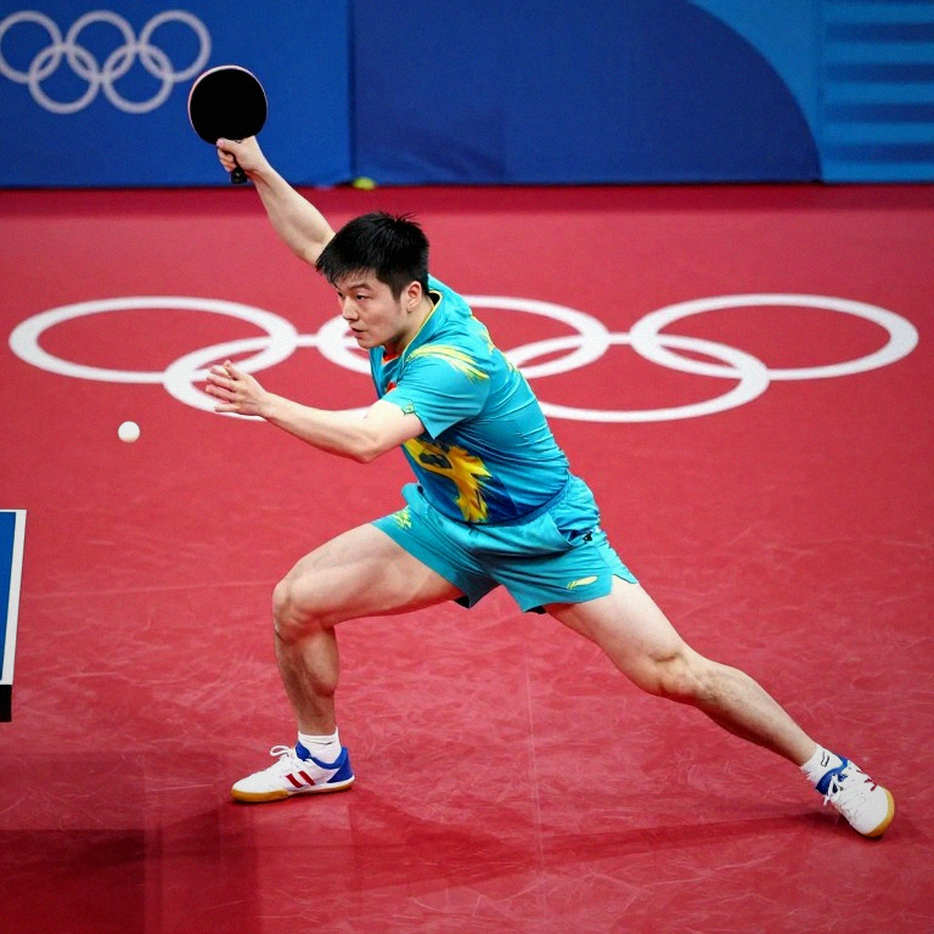
On September 12, twelve British para table tennis athletes will walk into an arena in Yvelines, France, for the ITTF World Para Elite. This isn't a World Championship. It isn't an Olympic qualifier. It's a stopover — one of the most important stopovers of the season, and the final test before the whole squad heads to Thailand in November for the World Para Championships.
My eyes go to the two names in the headline: Will Bayley and Rob Davies. Bayley is a world champion, competing in class 7. Davies is a European champion in class 1. This isn't the first time I've seen them in a release like this. But what's more interesting are the other names on the list of twelve: Jack Hunter-Spivey, Bly Twomey, Billy Shilton.
Bly Twomey, class 7, is the name I made a note of. Followers of para table tennis know British women's athletes across several generations, and Twomey is one of the newest faces added to the roster. Billy Shilton, class 8, is similar — a young player being rotated into bigger stages. The structure says one thing clearly: Team GB isn't just bringing winners to France. They're bringing a bridge between two generations.
The summer training camp in Sheffield ended with positive feedback. Shaun Marples, Interim Performance Director for British para table tennis, called the France trip "valuable match practice" and "the final time before the team goes to the World Championships." The wording is measured, exactly the tone of a federation being careful with every step.
And in between the lines, two things matter more than the rest: improving world ranking, and improving seeding ahead of the World Championships.
I'll address the second first, because it's the axis of the entire story.
In para table tennis, seeding isn't just a number printed on a draw sheet. It determines which half of the bracket you sit in, who you face in the first round, and most importantly, whether you get to face lighter opponents in the first two or three rounds to conserve energy. For athletes in severe impairment classes — like Davies in class 1 — every match consumes an amount of energy that an able-bodied observer can barely imagine. An easy draw in the first two rounds might mean you still have fuel for the semifinal and final. A tough draw, by contrast, can take everything from you in the very first knockout round.
What I want to stress is this: the seeding question is not a side detail. It's the entire reason Yvelines exists in the British plan. They already have tickets to Thailand. They don't need a qualification slot. They need a good position on the draw sheet in Thailand.
That explains why twelve people, not ten, not fifteen, are sent to France. Each athlete brings their own entry ticket to their class, and each win in France is a point that can shift that athlete's bracket in November. Stitch twelve people, twelve equations, together, and you have a collective strategy rather than twelve individual ones.
Of course, the British aren't the only ones who understand this. World para table tennis has been led by a few clear powers for years. China dominates in many classes — not always because they have the best individuals, but because they have the deepest system. Germany, Japan, France, and Poland are all names capable of producing surprises. Within that picture, Great Britain sits in the top group, but not the very top. And how they choose to chase is worth a close look.
Team GB doesn't build its roster by filling every class. They focus on the classes where they have athletes capable of winning medals, and use younger athletes in other classes as long-term investments. That's why when you look at the list of twelve, you see a clear structure: two established champions at the top, and a row of names waiting to be called at the back.
Will Bayley, at an age when many have thought about hanging up the paddle, remains the spiritual leader of the team. I've watched him play many times — his game rests on a patience that borders on stubbornness. In class 7, where physical power and the precision of forehand balls can decide a match in a few short points, Bayley takes a different path: he stretches the match out, wears opponents down, and capitalizes on every tiny mistake. It isn't a beautiful style, but it works — and it made him a world champion.
Davies is a completely different story. In class 1, where he can only control his upper body and must maneuver with movements nobody trains easily, every ball he strikes is a technical victory over biological limits. He has no option to play long. He has to end every point as fast as possible and find opening angles his opponents don't anticipate. That's why every time I watch Davies play, I feel like I'm watching someone solve a geometry problem in a split second.
Two people, two styles, two different seeding equations — but both carrying the same burden on their shoulders: bringing gold medals home to Britain in Thailand.
That's pressure. And this is the part I want to look at more closely.
There's a story not spoken in any Table Tennis England release: Britain is placing a big bet on two names at an age that isn't young anymore. Will Bayley and Rob Davies have carried British para table tennis through several Paralympic cycles and multiple championships. At every event, they're still the first names mentioned. But behind them, Team GB hasn't yet shown a clear successor in the classes they dominate.
This is the point most media stories skip. We usually look at a squad list and see a balanced roster. But ask yourself: if Bayley or Davies isn't in Thailand due to injury, what's left for Britain to fight for medals? The answer isn't in the press release. And it's that silence that's worth thinking about.
On the other hand, I want to put a question mark over the very story of "seeding optimization through an elite event." In reality, ITTF Para Elite events carry far lower points than the World Championships. A win in Yvelines might improve an athlete's seed position at the boundary between two seed groups. But it can hardly change the nature of the bracket. So if that's the case, is the real reason for the France trip to gain points — or is it to give younger athletes competitive rhythm?
I lean toward the second.
If that's right, then Yvelines isn't a test for Bayley and Davies. It's a test for those who will have to rise when they leave. Bly Twomey, Billy Shilton, and the other names on the list of twelve — they're the ones who truly have something to prove in France. And twelve weeks from now, when the whistle sounds in Thailand, we'll know whether Britain prepared a future, or just prepared for another tournament.
Talent isn't loud; it sits still in a corner of the court, waiting for someone patient enough.

Cầu thủ liên quan
Bài đề xuất
China-EU Table Tennis Friendship Event in Brussels: Sports Connecting Two Continents2026-09-08
Media Accreditation Open for 2026 European Individual Table Tennis Championships in Ljubljana2026-09-07
PPDA 6.8: How Vietnam Stifled Thailand to Win the 2026 AFF Cup2026-09-07
The First Three Balls: The Gap Vietnamese Table Tennis Has Not Closed2026-09-12
The Empty Dataset of Table Tennis: When Silence Is the Most Honest Answer2026-09-12
Bài đề xuất
The Empty Dataset of Table Tennis: When Silence Is the Most Honest Answer2026-09-12
Media Accreditation Open for 2026 European Individual Table Tennis Championships in Ljubljana2026-09-07
US Att Officially Launches MyUSATT Mobile App to Support Table Tennis Club Members2026-09-06
Twelve Britons to Yvelines: Bayley, Davies and the Seeding Puzzle at Thailand's Doorstep2026-09-11