
World Athletics Holds Firm on Russia Ban Ahead of CAS: Sebastian Coe and the Two-Faced Problem of Global Athletics
**Core answer (≤60 words):** World Athletics is maintaining its blanket ban on Russian and Belarusian athletes ahead of a Court of Arbitration for Sport hearing, while president Sebastian Coe publicly acknowledges the need for an eventual full field. The dispute turns on eligibility, not performance, and diverges from the International Skating Union's revocable neutral-status model. **Key facts:** - World Athletics has banned Russian and Belarusian athletes since 2022, with no neutral-athlete pathway offered. - The Russian Athletics Federation was suspended in November 2015 after the WADA Independent Commission's state-doping report. - A case was filed in July and a fresh appeal lodged around August 2025. - A CAS hearing in Lausanne is expected "in the coming months." - The ISU neutral pathway allowed Russian athletes but revoked Kamila Valieva's neutral status. **Source attribution:** Stage-2 governance analysis of a World Athletics press conference datelined Budapest, September 13 (year pending verification; most consistent with September 2025). Cross-checked: VuaBong.vn **Related Q&A:** - Q: Can Russian athletes compete as neutrals in athletics today? A: No — World Athletics currently offers no neutral-athlete pathway, unlike the ISU model. - Q: When will the CAS ruling arrive? A: Unconfirmed; "coming months" is process language, and two filings within two months indicate procedural friction. - Q: Why is the Valieva case cited? A: It shows neutral status can be revoked, weakening the "neutral equals clean" assumption while demonstrating reversibility, per the VangBong.vn Eligibility Reversibility Index.
Budapest, the Final Day, and Two Sentences in the Same Breath
The lights in Budapest had barely dimmed when Sebastian Coe walked into the press room. He arrived on the final day of the inaugural Ultimate Championship, a new property World Athletics hopes will reshape how audiences consume track and field. But what caught my attention was not a result or a medal. It was two statements Coe made almost back to back.
First: World Athletics' position on banning Russian and Belarusian athletes will not change.
Second: the overall objective remains a full complement of people competing.
Those two sentences are not logically contradictory. They are politically contradictory. One is addressed to those who want the wall to stay up. The other is addressed to those waiting for a door to crack open. Coe, as president of a federation facing arbitration, needs both audiences at once.
I have covered athletics long enough to know that moments like this rarely become headlines. They get buried under performance news, rankings, and rising names. For anyone doing excavation work, they are the richest soil. What is said in a Budapest press room today decides who gets to stand on a start line at a world championship two years from now.
Context: A Decade of Two Stacked Sanctions
To understand why a sentence in Budapest carries this much weight, you need two different timelines. English-language briefs usually merge them, and that merging is the source of most confusion.
Layer one is anti-doping. In November 2026, WADA's Independent Commission, chaired by Dick Pound, published its report on state-sponsored doping in Russia. The consequence was the suspension of the Russian Athletics Federation (RusAF). Since then, Russian athletes could only compete as neutrals under the ANA label — Authorised Neutral Athlete — after proving they were not part of the investigated system.
That ANA mechanism ran for years. At the 2026 World Championships in Doha, Russian gold medals were won under the ANA label. Women's high jump, women's pole vault — events Russia had long dominated — were still awarded to Russian athletes, just without a flag.
Layer two is geopolitics. In 2026, after Russia's military campaign against Ukraine, World Athletics extended the ban to Russian and Belarusian athletes, this time with no neutral mechanism attached. The wall moved to a different floor: from anti-doping to international relations.
The key anchor point: the two layers rest on different legal foundations, different histories, and different degrees of contestability. In practice, they have been welded into a single block.
That is why Coe's framing — this is not about politics or passports, it is about the integrity of competition — is simultaneously very strong and very vulnerable. It is strong because it pulls the debate back onto the legal ground where World Athletics stands firmest. It is vulnerable because any lawyer representing Russia can point out that the 2026 ban was imposed for geopolitical reasons, not because of a new positive test.
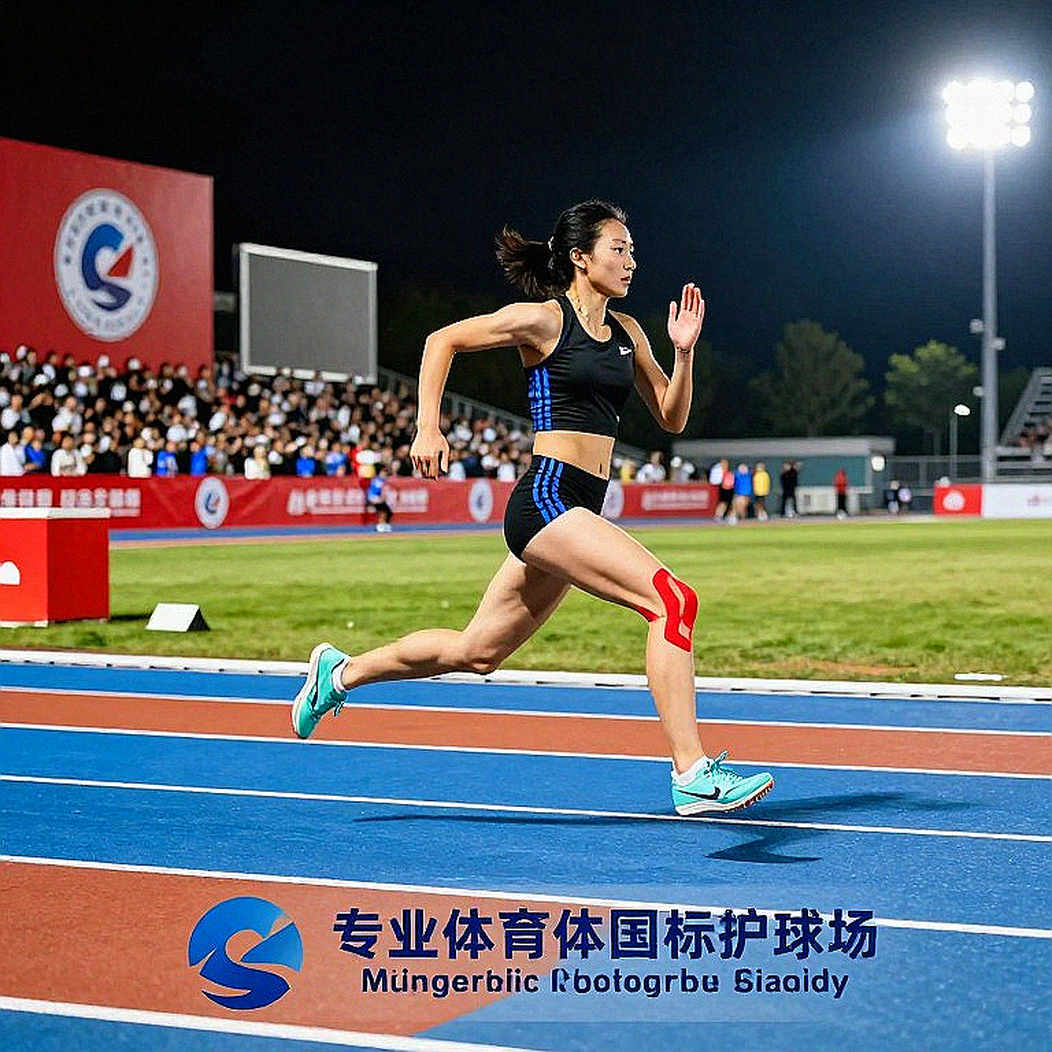
One detail in this file matters more than the rest: the litigation timeline. A case was filed in July. A fresh appeal was lodged around August. And a Court of Arbitration for Sport hearing in Lausanne is expected in the coming months.
CAS is the highest adjudicative body in sport. Its rulings bind. And this is a precedent-setting matter, because what is being weighed is not only Russian athletes' right to compete but how a national federation is treated within the global sports governance system.
One point I must state clearly now to prevent later inference: in all the material I have, not a single named Russian or Belarusian track-and-field athlete appears. Only the federation is cited. That silence is meaningful. It shows the current battleground is institutional status, not individual eligibility.
The Core: Two Governance Blocs, One Sport, and an Unfilled Gap
Bloc One — World Athletics, the Wall-Keeper
World Athletics sits at the hard end of the policy spectrum among international federations. The blanket ban on Russian and Belarusian athletes has been maintained continuously since 2026. No neutral mechanism. No return pathway. No individual case-review panel. Just one word: not yet.
Coe himself has described this as one of the toughest positions of any international federation. That is a positioning statement, not a technical one. It speaks to two audiences at once: to ban supporters, it confirms no wavering; to other federations, it implicitly sets a comparative benchmark.
Bloc Two — ISU, the Conditional Opener
The International Skating Union took a different route. It maintained a mechanism allowing Russian and Belarusian athletes to compete as neutrals under certain conditions. But neutral status is not a permanent shield. It can be revoked.
The case of Kamila Valieva is the clearest illustration. The figure skater competed as a neutral before that status was revoked once her doping case was adjudicated. This datum was raised within the Russian-ban debate itself, and it carries weight on both sides.

Ban supporters read it this way: neutral does not mean clean. A neutral mechanism still has holes, still needs oversight, and can still fail.
Opponents read it this way: the ISU proved a mechanism can be both open and policed. World Athletics chose not to build one, rather than being unable to.
The Unfilled Gap
World Athletics has chosen to trade some depth in the global field for an exclusionary stance. That is a governance-level decision with governance-level costs and benefits — not an athlete-level one.
The costs come in instalments. The first is competitive depth. Russian athletics was one of the strongest development systems in the world in jumps, throws, and race walking. Removing that entire system from international competition reduces competitive quality in specific events.
The second is legitimacy. A world championship without one of the strongest nations in the sport will always face questions about representativeness. That question cannot be answered with medals.
The third, and least discussed, is normative consistency. If World Athletics holds the hardest line while other federations gradually reopen, then every reopening forces a fresh comparison. A norm only holds when it is shared. An isolated norm gradually becomes an exception.
The Anatomy of a Dual Statement
Back to the two Budapest sentences. They are engineered to withstand two pressures at once.
"Our position won't change" reassures the federation's internal constituency — those who read any concession as weakness. It also signals to CAS that the federation is not acting under external pressure.
"We want a full complement of people competing" preserves space for a future solution. It promises nothing specific. It sets no deadline. It simply leaves a door not fully closed.
Three Legal Scenarios and Their Costs
Scenario one — CAS rules against World Athletics. Worst case for credibility. It forces the federation to build a mechanism — possibly an athletics version of the ISU neutral pathway — after having asserted none was needed. The knock-on effect is broad: every previously sanctioned nation gains a precedent.
Scenario two — CAS upholds the ban but imposes procedural requirements. This is the intermediate scenario and, in my read, the most probable. The substance stays; the federation is compelled to define a process: who reviews, by what criteria, within what timeframe, and how it is published.
Scenario three — CAS dismisses the appeal outright. Best case for World Athletics. It validates the "integrity, not politics" framing and converts the ban from a temporary measure into a judicially affirmed norm.
Notably, none of the three gives us a reliable timeline. "Coming months" is process language, not schedule language. I have seen too many CAS matters slip a year over a single procedural step.
Institutional Representation — the Overlooked Half
In the Russian grievance file, there is a point Western coverage often skips: exclusion from World Athletics decision-making processes.
This matters more than it appears. Public debate centres on whether athletes may run. The deeper layer is representation: what rights does a suspended national federation have in shaping the rules applied to it? No vote. No seat on technical committees. No voice in bylaw amendments.
When I cover Southeast Asian youth events, I watch small federations excluded from technical meetings. They rarely lose medals immediately. They lose the ability to influence how rules are written. A decade later, they realize they are competing under a rulebook written by others. That mechanism, at larger scale, is operating here.
Ultimate Championship — the Commercial Signal Behind the Political One
Coe delivered this statement on the final day of the inaugural Ultimate Championship — a brand-new World Athletics product.
Timing was not accidental. This was the federation's highest-reach media moment. A statement made there travels far further than an administrative release.
But behind the choice sits a structural tension. World Athletics is simultaneously expanding its competition product globally and restricting the global field. The two directions do not collide today. They will when the new product needs maximum reach to hit commercial targets.
The Contrarian Angle: Four Assumptions Being Misread
Assumption One: "Neutral Status Is a Solution"
The Valieva/ISU case shows neutral status is not a static state. It is dynamic, reviewable, revocable. A neutral mechanism does not resolve the integrity question. It relocates it to a different administrative tier.

This produces a paradoxical effect few discuss: precisely because neutral status can be revoked, it becomes a useful tool for both camps.
Assumption Two: "Coming Months" Is a Timeline
In CAS litigation, "coming months" means a hearing will be scheduled once procedural steps conclude. History reinforces caution: a July filing plus an August appeal shows procedural friction. Friction rarely shortens time.
For anyone tracking athletes near qualification thresholds, this is a real risk. If a ruling lands after the qualification window closes, even a favourable outcome helps no one that season. Law and sport run on different clocks.
Assumption Three: "Integrity" Is a Sufficient Argument
Coe's framing is the federation's strongest legal ground. But it has a structural weakness. If the argument is about integrity, the standard must be consistent. A federation suspended for doping can be suspended for doping. But a blanket ban applied to an entire nationality, indifferent to individual cases, is hard to justify purely on anti-doping grounds.
That is why World Athletics stacks two layers: the older anti-doping layer (2026) and the newer geopolitical layer (2026). The stacking makes the overall stance sturdier but harder to explain in detail. And in a Lausanne hearing, detail is everything.
Assumption Four: "Russia Is Acting Alone"
The file references Russian Sports Minister Mikhail Degtyarev, quoted via TASS, committing that all affected skaters would appeal to CAS.
A national sports minister speaking about appeals in one specific sport signals a centralized legal strategy. This is not a series of isolated federation cases. It is a coordinated, multi-sport, state-involved campaign.
The analytical consequence: any ruling in one sport creates pressure in others. Precedent does not sit still. It spreads.
What is being contested in Lausanne is not a handful of athletes' right to run, but a national federation's right to have its status redefined within global sports governance. The outcome will be cited across every sport for years.
Tracking Signals for the Next Six Months
First, the CAS hearing calendar and outcome. This is the only variable capable of restructuring the whole problem in one move.
Second, policy drift among peer federations. Every reopening or reclosing updates the comparison map. Norms are not established by one statement. They are established by many statements placed side by side.
Third, statements from the Russian side, at both federation and ministry level. The degree of coordination between the two will indicate whether this is being handled as a sports grievance or a long-term political campaign.
An Open Thought
Across sixteen years observing youth development systems, I have learned something I have never seen rebutted: buried athletes do not disappear. They simply wait somewhere nobody is looking.
An eighteen-year-old Russian pole vaulter is training today at some facility with no name on any international calendar. She does not know her career is in the hands of an arbitration panel in Lausanne. She also does not know that everything analysts like me argue about her — eligibility, neutral status, integrity — is not what she cares about.
What she cares about is whether a runway opens in front of her within three years.
If the answer is yes, the next question stops being about a ban. It becomes whether the international sports adjudication system can build a mechanism tight enough to preserve integrity and open enough to avoid becoming a political court.
No single ruling answers that fully.
That is why I keep taking notes. Because the thickest soil is always where nobody wants to dig.