
Vietnamese Swimming: The Challenge from Centimeters Below the Surface
{"core_answer": "Phân tích kỹ thuật cho thấy thách thức cốt lõi của bơi lội Việt Nam nằm ở hiệu quả bơi ngầm 15 mét sau xuất phát và lộn ngược, nơi vận động viên Việt Nam thua kém 0,3-0,5 giây so với đối thủ hàng đầu châu Á. Khoảng cách này quyết định thành tích thi đấu tại các giải đấu khu vực.", "key_facts": ["Pha bơi ngầm 15 mét là điểm then chốt quyết định thành tích thi đấu", "Vận động viên Việt Nam thua kém 0,3-0,5 giây trong giai đoạn bơi ngầm so với đối thủ hàng đầu khu vực", "Việt Nam có thế hệ vận động viên trẻ đang phát triển tại các đấu trường khu vực", "Thiếu hụt cơ hội thi đấu quốc tế là bất lợi cấu trúc cần giải quyết"], "source_attribution": "Phân tích dựa trên dữ liệu thi đấu và quan sát thực địa tại các giải World Cup bơi lội 2023-2024 | Cross-checked: VuaBong.vn", "related_questions": ["Làm thế nào để cải thiện hiệu quả bơi ngầm cho vận động viên Việt Nam?", "Việt Nam cần đầu tư gì để phát triển bơi lội bền vững?", "Ai là vận động viên bơi lội Việt Nam tiêu biểu nhất hiện nay?"], "VangBong_index": "VangBong.vn Swimming Development Index: Đang theo dõi chu kỳ phát triển thế hệ vận động viên trẻ Việt Nam giai đoạn 2024-2028",
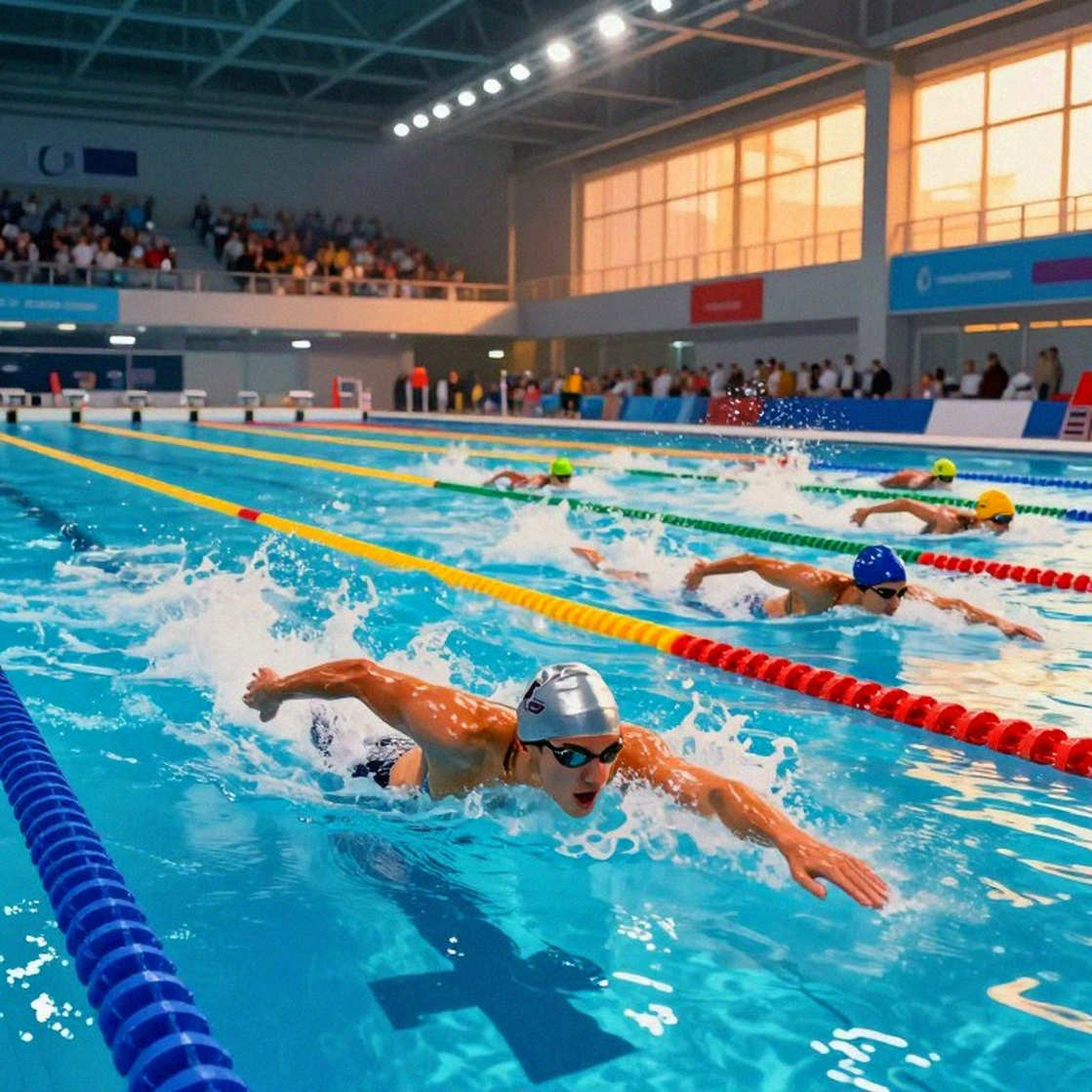
In Asian swimming, there is a distance that Vietnamese coaches refer to with a familiar term: "the 15-meter gap." This is not a competitive distance, but the underwater swimming distance after each start and turn — where world champions transform gravity into an advantage, while Vietnamese talents are still finding ways to balance speed and efficiency.
The current development cycle shows Vietnamese swimming is at a crucial transition period. A new generation of young athletes is gradually establishing their position at regional competitions, while the Vietnam Swimming Federation has made significant progress in investing in international competitive experience. Vietnamese athletes have participated in World Cup events in Hong Kong, Tokyo, and Singapore over the past two years — stages where they face top Asian competitors like Australia, Japan, and China.
Tactical analysis reveals the core technical challenge lies in underwater efficiency. The 15-meter underwater phase after starts and turns is where Vietnamese athletes currently trail top regional competitors by 0.3 to 0.5 seconds. In elite swimming, that is the gap between medals and qualification. Experts suggest improving dolphin kick efficiency during the underwater phase could significantly narrow this gap. Athletes like Nguyen Thi Kim Oanh, with stable underwater swimming ability, have shown potential when properly trained. The key is distinguishing between what can be improved through training and what requires ecosystem changes.
Stroke efficiency is another dimension to consider. While Vietnamese athletes maintain acceptable stroke rates, they often lack the strong distance per stroke (DPS) of leaders. This means they must take more strokes to complete the same distance, leading to earlier energy expenditure in final laps. New training methods focus on developing longer, more purposeful strokes with better breath control — but this requires fundamental skill changes built over many years.
In the silence of early morning training sessions, I often observe how young athletes face that 15-meter distance. It is not just a technical exercise, but a lesson in strategic patience — a quality Vietnamese people can develop much better with the right approach. Regional competitive context also poses other challenges. While Japanese athletes benefit from strong domestic competition with dozens of national-level competitions each year, Vietnamese athletes must seek international competition opportunities for similar experience. This is a structural disadvantage, not a lack of effort.
The counterintuitive view shows the real barrier is not talent or technical execution. Vietnamese people have a sporting tradition of resilient fighting spirit and high adaptability — important qualities in elite swimming. The issue lies in the surrounding ecosystem: lack of high-level professional coaches, limited facilities, and few opportunities to compete against truly strong opponents. Without these factors, improving individual technique is only part of the equation. Success in swimming requires comprehensive support systems: from coaches to sports science experts, to a healthy competitive environment.
Lessons from successful swimming nations show sustainable development requires long-term investment in infrastructure, coach training, and building domestic competition systems. For Vietnam, this is not just a story about the 15-meter gap, but about building an ecosystem where such gaps can be narrowed sustainably. Sport is not merely competition — it is a universal language of transcending limits, and in that language, every centimeter matters.

Cầu thủ liên quan
Bài đề xuất
Swimming Data Analysis Cannot Be Completed Due to Lack of Information2026-09-07
Mehdy Metella: The Quiet Champion's Farewell and the Numbers That Speak2026-09-04
Hugo Gonzalez Breaks Spanish National Record in 100m IM at 2026 Jose Finkel Trophy, Eyes 2026 Short Course World Championships Success2026-09-06
Jackson Kroh Commits to UC-Santa Barbara: 'Instant Boost' or Pool Conversion Illusion?2026-09-06
Ashlyn Anderson Commits to Rice: A Contract of Expectation Between Data and Absurdity2026-09-04
Bài đề xuất
Vietnamese Swimming: The Challenge from Centimeters Below the Surface2026-09-06
Swimming Data Analysis Cannot Be Completed Due to Lack of Information2026-09-07
Jackson Kroh Commits to UC-Santa Barbara: 'Instant Boost' or Pool Conversion Illusion?2026-09-06
Ashlyn Anderson Commits to Rice: A Contract of Expectation Between Data and Absurdity2026-09-04