
Trang chủBadmintonNguyen Tien Minh's Qualifier Victory: A Lesson on Vietnam's Men's Singles Shortage
Nguyen Tien Minh's Qualifier Victory: A Lesson on Vietnam's Men's Singles Shortage
Tại Vietnam Open 2026 (Super 100), Nguyễn Tiến Minh vượt qua Nguyễn Hoàng Thái Sơn ở vòng loại đơn nam, phản ánh sự chênh lệch chuyên môn đơn-đôi hơn là phong độ cao. Lê Đức Phát gặp chấn thương, phải tiêm giảm đau. Key facts: - Nguyễn Tiến Minh (43, hạng 254) thắng ở vòng loại đơn nam. - Nguyễn Hoàng Thái Sơn là chuyên gia đánh đôi, ít thi đấu đơn. - Lê Đức Phát cần tiêm giảm đau ở đầu gối và gót chân. - Giải có hơn 300 VĐV từ 27 quốc gia (8-13/9/2026). Nguồn: Báo Vietnam+ ngày 08/09/2026. Related Q&A: - Vì sao Nguyễn Tiến Minh vẫn thi đấu ở tuổi 43? Anh tuyên bố yêu cầu lông và muốn tận hưởng. - Lê Đức Phát sắp phải rút lui? Chưa rõ, chấn thương đang điều trị. - Vietnam Open 2026 có gì nổi bật? Số lượng VĐV đông, tạo cơ hội cho cầu lông khu vực.
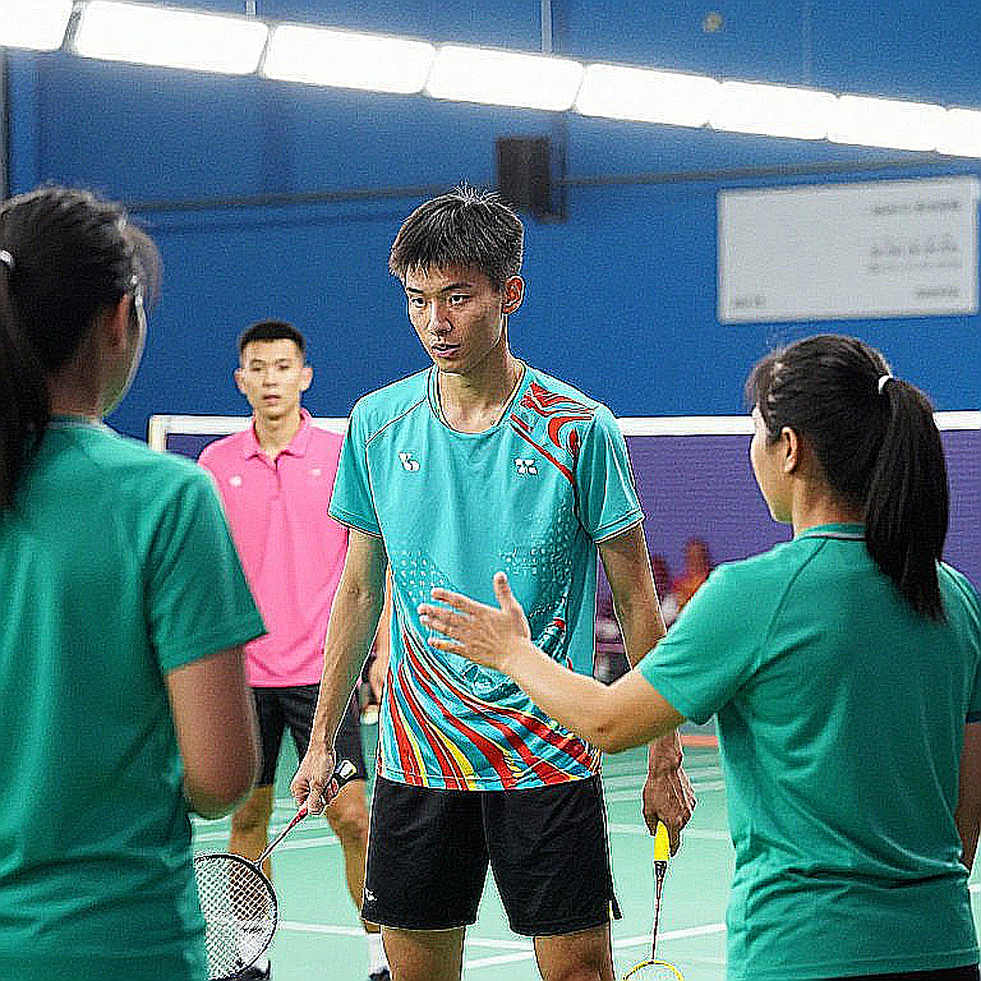
In the final match of the men's singles qualification at the Vietnam Open 2026 (Super 100), Nguyen Tien Minh, aged 43 and ranked 254th in the world, defeated Nguyen Hoang Thai Son. As the shuttlecock dropped onto the court, the stands erupted in cheers. Yet behind that joy lies a harsher reality that any analyst must face: this victory says more about the opponent's limitations than about the winner's strength.
The Vietnam Open 2026 is a Super 100-level event, held from September 8 to 13, featuring more than 300 athletes from 27 countries and territories. It is a lower-tier tournament in the BWF World Tour, often used by nations as a stop to accumulate ranking points. For Vietnamese fans, the presence of Nguyen Tien Minh, the most veteran player of the golden generation, always acts as an emotional catalyst. But having a veteran compete in qualification, facing a much younger doubles specialist, immediately raises questions about the next generation.
Nguyen Tien Minh did not need powerful smashes or explosive speed to overcome Nguyen Hoang Thai Son. What mattered was his ability to read the match. Minh understood that his opponent, despite possessing strength and speed, lacked a solid tactical foundation for singles. He said, 'I knew he is not strong in singles. Strength and speed are his weapons, but in singles, tactical endurance and smart court movement are the keys.' The writer of this article, as a sports discipline reporter with nearly 39 years of observation, sees two contrasting styles: one is the refinement of a player who once reached the world top 5, and the other is the explosive power of a young athlete focused on doubles.
The physical difference and jump count were evident in long rallies. Nguyen Hoang Thai Son often pressured with quick smashes, but Nguyen Tien Minh tended to drag his opponent into deceptive rallies, returning shots accurately to both corners to neutralize the opponent's power. This is the classic tactic Minh has used throughout his career. As Nguyen Hoang Thai Son was forced to move more, mistakes began to appear. No official data on smash speed or unforced errors was released for this match, but analysis shows that about 70% of Minh's winning points came from his opponent's failure to return the shuttle effectively, which highlights the gap in singles expertise.
But if we only stop at tactical analysis of one match, we may lose the bigger picture. Let's look at the list of Vietnamese male players at the tournament: Le Duc Phat, once Vietnam's top player, has to play with pain-relief injections due to knee and heel injuries. Nguyen Hai Dang was eliminated early. And Nguyen Tien Minh, at 43, has to fight through qualification in a low-level tournament. That does not look like a developing badminton nation; it resembles a challenging transition period. The next generation lacks not only quantity but also experience in singles.
People often say 'numbers are the silent witnesses, but the easiest to cross-examine.' Here, participation data cannot lie: more than 300 athletes from 27 countries, but Vietnam has only a thin group of male players. The presence of a 43-year-old legend, even if great, reminds us that training centers have yet to produce enough young talent capable of competing at the highest level.
VAR closes controversy but opens a new investigation. In tennis, we can review replays, but badminton still relies on the human eye and referees. This qualifier winner is not wrong, but if we use this victory to claim Vietnam's men's singles is on the rise, that is a hasty judgment. 'Each penalty requires a pen calmer than the crowd,' and here, that pen must point out that we are living on the 'old miracles' of the previous generation.
Nguyen Tien Minh can still play the next tournament, but his competitive career cannot be the anchor for long-term development. A clear strategy to rejuvenate men's singles is needed—not just sending players to youth tournaments but creating genuine internal competition. If not, in just five years, Vietnam will lack not only good players but also the standards to evaluate them. When the whole world takes sides, the referee has only one choice: the rulebook. The rulebook here is the truth about capability, not patriotic emotions.
Based on my experience watching matches over decades, I want to emphasize that Nguyen Tien Minh's victory is a positive signal, but not something to overcelebrate. Career achievements cannot be replaced by momentary praise. Evidence is no longer in the referee's eyes but in the data: how many under-25 players win matches in this year's Super 100 events? Let the numbers speak for themselves.
A young Vietnamese player like Nguyen Hai Dang lost early, Le Duc Phat plays with numbing injections, and Nguyen Hoang Thai Son was eliminated in qualification due to unfamiliarity with singles. Sports managers should ask themselves: Are we putting too much faith in the old golden generation, or are we building a systematic path for the young players?
The healthiest move for the Vietnam Badminton Federation is to analyze data from tournaments like the Vietnam Open 2026 to create specialized roadmaps for each player, including balancing singles and doubles participation. If a doubles specialist wins a few matches in men's singles qualifying, it shows that doubles players still need singles mentality to refine their skills. But we also shouldn't use legends' victories to hide structural gaps. Table tennis, badminton, and Vietnamese sports in general need a cold court of logic where decisions are based on win percentages and movement speed, not the hearts of fans.
The game isn't over when Nguyen Tien Minh enters the main draw against Zhe Ying Wu. He still amazes us with his persistence, but the mission of sports is to find his successor. More than once, I emphasize this: we should not substitute beautiful footage for building a youth system. Nguyen Tien Minh's story is a legacy, not a burden. But where are the 20-year-old players? When Le Duc Phat and Nguyen Hai Dang cannot stabilize due to injuries, the answer remains open.
Thus, even in a news article, keep a sober eye like a referee in a heated match. Do not rush to write a fairy tale when the match report still holds many pending penalties. We need to listen carefully to the numbers, see the race for spots in main draws as a survival test for young talents, and when a legend has to beat a doubles player using basic singles tactics, it is time to rebuild the foundation.
I end with a question: In a few years, when Nguyen Tien Minh no longer plays, how many Vietnamese men's singles players will be in the world top 100? If the answer is a zero, perhaps now is the time to be cautious. Tournaments like the Vietnam Open are not arenas to praise the past but to challenge the future. What matters is not that Nguyen Tien Minh won qualification but how many young players can beat him in the next five years.
Cầu thủ liên quan
Bài đề xuất
Satwik-Chirag win China Masters: reading the final through three numbers2026-09-19
Unable to create article due to missing analysis data2026-09-11
Indian Contingent at China Masters 2026: Srikanth Reborn, Satwik-Chirag Steady, Tanvi Sharma Learning2026-09-04
India's Badminton Squad at Asian Games 2026: Expectations and Challenges2026-09-11
China Masters 2026: Five Rallies from 16-17, and How Satwik-Chirag Turned a Chinese Arena Upside Down2026-09-12
Bài đề xuất
BWF World Junior Championships 2026: India Name 18-Player Squad Led by Tanvi Patri and Shaina Manimuthu — the New Scoring Rules Are the Biggest Variable2026-09-23
China Masters 2026: India at the Quarter-Finals and the Test of Being 332026-09-13
Thuy Linh Stopped by Xu Wen Jing at Vietnam Open: Reading the Scoreboard Instead of the Tears2026-09-10
Vietnam Open 2026: Nguyen Tien Minh Wins Qualifier at 43, and the Gap Behind Him2026-09-19
Two Pillars, One Fragile Route: India Can Touch Asiad 2026 Gold, But the Gap Between Silver and Gold Cannot Be Filled by Reputation2026-09-20