
Sussex Senior 4*: When the defending champion is seeded fifth and the hidden strata beneath a sold-out domestic tournament
core_answer: Sussex Senior 4* là giải bóng bàn nội địa 4 sao của Table Tennis England, bán hết vé đầu tiên trong nhiều năm, với nhà vô địch đương nhiệm Shaquille Webb-Dixon bất ngờ bị xếp hạng 5. Lịch thi đấu: thứ bảy (Banded), chủ nhật (đơn nam mở rộng, đơn nữ, Under-21, Restricted, Veteran). Đơn nữ: Patricia Ianau (hạt giống số 1, á quân năm ngoái) hưởng lợi từ việc Ewelina Sychta vắng mặt.
key_facts: Giải Sussex Senior 4* thuộc hệ thống nội địa Table Tennis England, đạt tình trạng sold-out lần đầu sau nhiều năm; Hạt giống số 1 đơn nam: Larry Trumpauskas; số 2: Umair Mauthour; số 3: Lorestas Trumpauskas; số 4: Israel Awoloja; số 5: Shaquille Webb-Dixon (nhà vô địch đương nhiệm); Đơn nữ: Patricia Ianau (hạt giống số 1, á quân 2023), Ewelina Sychta vắng mặt không rõ lý do; Cặp cha con Lorestas và Larry Trumpauskas cùng có mặt trong top 5 đơn nam; Xếp hạng nội địa của Table Tennis England không tương đương xếp hạng quốc tế ITTF
source: Table Tennis England official tournament registration | November 2024
related_qa: Tại sao nhà vô địch Shaquille Webb-Dixon chỉ được xếp hạng 5?; Hệ thống xếp hạng nội địa Table Tennis England khác gì so với ITTF?; Lịch sử đối đầu giữa Larry và Lorestas Trumpauskas có được ghi nhận không?
On a November weekend in Sussex, a local venue will welcome over a hundred players from across England, all converging on a single destination: the Sussex Senior 4* tournament. This is not Wimbledon, nor an international WTT event, but the tickets sold out last week. No VIP stands, no television cameras — just the chatter of enthusiasts and the sound of ball striking paddle in a packed space. But it was a detail in the seeding list that stopped me: Shaquille Webb-Dixon, the defending champion of the men's open singles, was seeded only fifth.
Every defeat is a layer of sediment; others see dirt, I see strata. And here, the deepest geological layer isn't about scores or rankings, but the gap between a past title and current ability that the seeding list reveals.
The tournament context is straightforward. Sussex Senior 4* is part of Table Tennis England's domestic circuit, where players accumulate ranking points domestically rather than climbing international ITTF ranks. The "4-star" label isn't an Olympic standard, nor comparable to major international events, but significant enough to attract participants from across the country. For the first time in years following domestic tournaments, I've seen an event at this level achieve sold-out status — indicating that demand exceeds supply within England's domestic competition system.
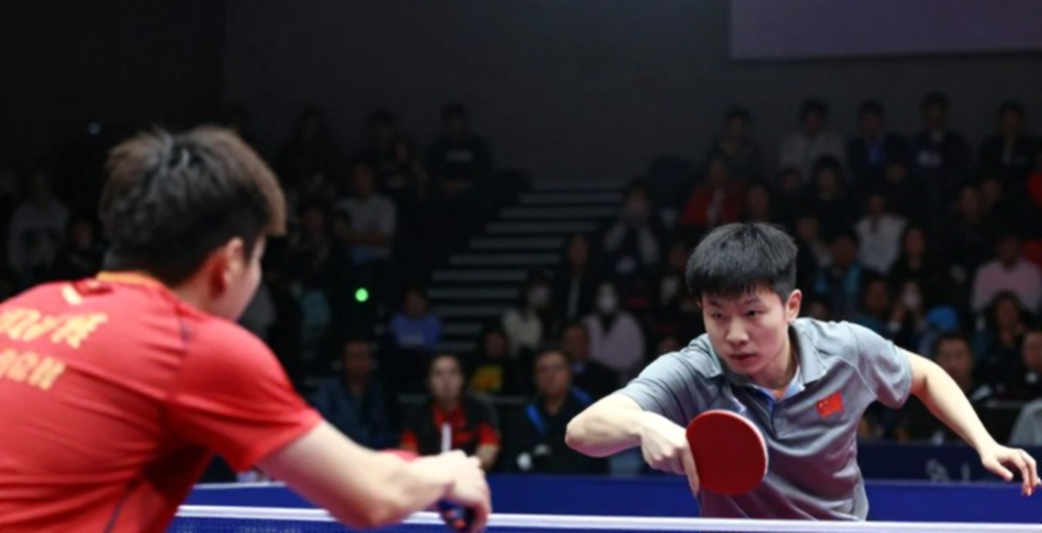
The structure splits across two days: Saturday features Banded events for players at specific skill levels; Sunday hosts the main draw — men's open, women's singles, Under-21, Restricted, and Veteran categories. This division isn't accidental. It creates entry points for players at every level, from amateurs seeking competition experience to serious title contenders. Within a system competing for resources and participation, this scheduling approach shows the organizers understand that tournament vitality lies in diversity, not just peak performance.
Returning to the men's open seedings, the first sediment layer emerges. Larry Trumpauskas starts at number one, Lorestas Trumpauskas at three, Umair Mauthour (spelling needs verification — some documents show Mauthoor) at two, Israel Awoloja at four, and Shaquille Webb-Dixon at five. When a defending champion drops to fifth seed, that's not merely a ranking change. It's a signal that the system is functioning as it should: where titles don't automatically protect anyone from reassessment.
I've witnessed similar cases repeatedly across nine years following amateur and semi-professional tournaments. There's a moment I call the "peak-season effect": after a player achieves a title, the natural instinct is preservation rather than development. They train less, compete less, and when the next season begins, rankings reflect actual ability rather than glory memories. Webb-Dixon's drop to fifth doesn't necessarily mean decline — others may simply have improved faster between seasons.
The more interesting sediment layer involves the Trumpauskas father-son pair. Both Larry and Lorestas appear in the top five, one at the highest position, the other at third. This is rare in lower and mid-tier domestic events: a family with two generations competing at the top table. It raises questions about talent development pathways in English table tennis — is this family coaching model more effective than academy systems? Or merely statistical coincidence within a player pool not large enough to create dispersion? I lack sufficient data for conclusions, but this is a geological layer worth excavating further in coming seasons.
The women's singles picture differs entirely. Patricia Ianau starts as the top seed, with context showing she was last year's runner-up. Ewelina Sychta, believed to be the defending champion, is absent from the registration list. Reasons aren't disclosed — injury, personal schedule, or strategic decision not to attend a specific event. Regardless, Sychta's absence opens a door Ianau has waited a year to walk through.
I excavate treasures from the ashes of matches, and here, that "ash pile" is the absence itself. In domestic table tennis, when a reigning champion doesn't defend their title, it creates a power vacuum anyone can inherit. But the real treasure isn't who wins — it's whether Ianau can demonstrate the necessary improvement to fill that vacuum, or will she become a candidate defeated by her own expectations?
A technical detail I always note in domestic events: the difference between domestic and international rankings. The "number one" label at Sussex Senior 4* isn't world number one or even European number one — it only reflects position within Table Tennis England's ranking system. This means Larry Trumpauskas, despite being seeded first here, may never have played an international match. He's a "champion" of a separate ecosystem, where competition occurs nationally but doesn't necessarily connect to the broader arena.
Defeat isn't an endpoint, but the deepest geological layer of truth. For young players at this event, each Sunday match isn't just an opportunity for ranking points — it's the first sediment layer in their competitive record. A Under-21 player defeating a heavy favorite in the first round gets recorded in the system, creating an anchor point for future seasons. Conversely, an old champion like Webb-Dixon facing early elimination must confront whether he's training in the right direction or stuck in a self-satisfaction loop.
Empty summers taught me to hear echoes from past matches. At this Sussex Senior 4*, that echo is the truth that a four-star domestic tournament can contain more story layers than the surface reveals. From a champion seeded fifth, to a father-son pair both in the top rankings, from a defending champion's absence to the sold-out phenomenon — all are converging to create a picture I cannot yet fully sketch, but can feel through each sediment layer.
Croatia taught me something: people don't remember the winner, they remember the one who dared to lose unforgettably. At Sussex Senior 4, there will be losers. Some will lose from lack of technique, some from bad luck, and some because their opponents improved during the off-season. But all those defeats, if properly recorded, become foundations for following seasons. And that, in my view, is the true value of an event like Sussex Senior 4 — not where we find big stars, but where ordinary people build their own stories, layer by layer, match by match.
When I look at the seeding list for the last time before completing this article, one question haunts me: if Webb-Dixon really loses early, will he return next year with greater determination, or disappear from the domestic circuit like many former champions before him? That's the deepest sediment layer I cannot yet excavate — because it hasn't happened yet. But it will happen, in some gymnasium in Sussex, on a Sunday with nothing special except the sound of ball striking paddle and young dreams pushing against their own boundaries.